




























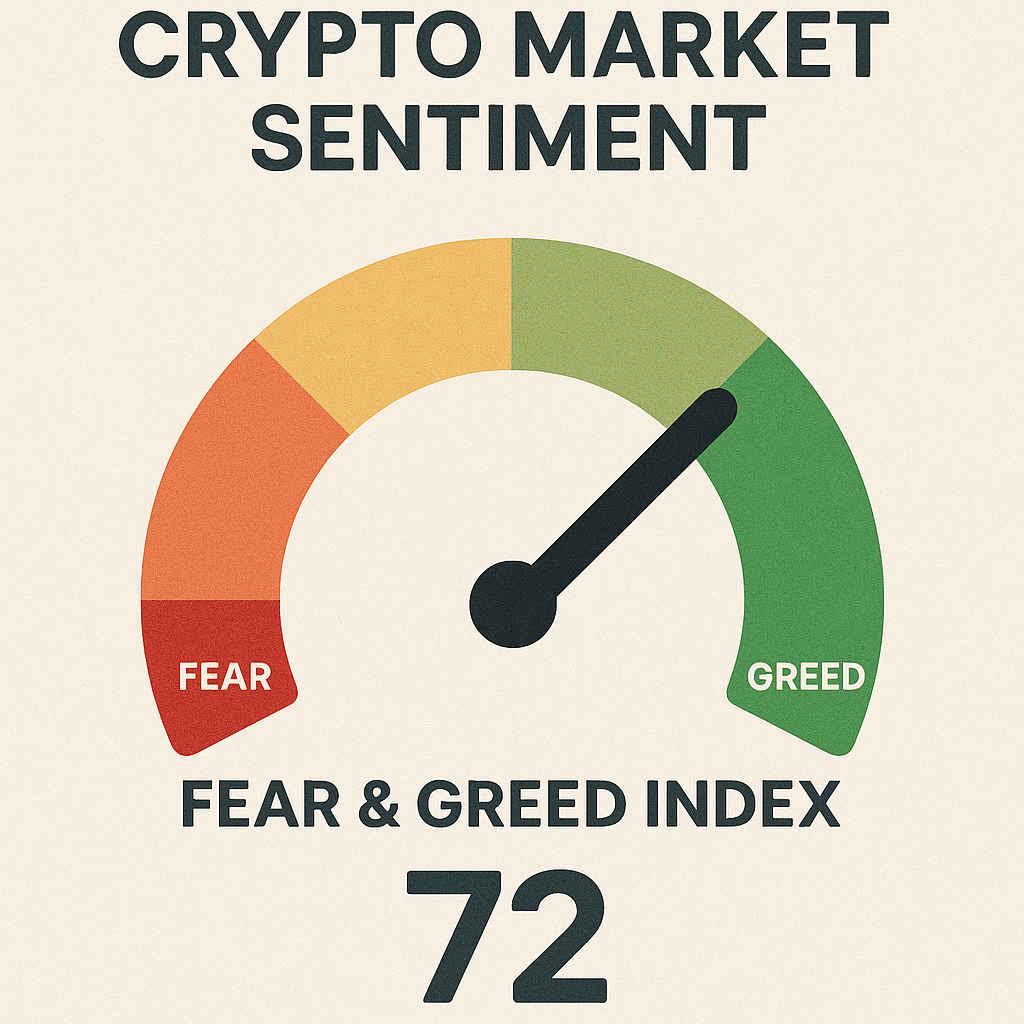
Crypto market sentiment is one of the most important forces shaping crypto prices, yet it is also one of the least understood by everyday investors. If you have ever watched Bitcoin surge on a wave of optimism or crash in a panic, you have seen crypto market sentiment in action. It reflects the crowd’s emotions, confidence and fear, which can push markets far away from what any spreadsheet might suggest.
In this guide, we will unpack what sentiment actually means in the context of crypto investing, how it is measured, and why tools like fear and greed indexes have become so popular. You will see how sentiment links to volatility, liquidity and regulation, and how professional traders use it as one input in their decision-making process. We will also look at practical ways to track sentiment in real time and how to avoid common emotional traps, like chasing hype or selling in a panic.
By the end, you will understand how to read crypto market sentiment and use it to support a calmer, more informed investing strategy.
Table of Contents
Crypto Market Sentiment and Its Impact on Investing
Crypto market sentiment drives many of the wild moves you see in crypto prices. You can have strong on-chain data and smart technical levels, yet a sudden wave of fear still sends everything lower. Or a rush of hype sends prices higher when very little has changed. If you want to invest with a clear head, you need to understand crypto market sentiment and how it affects your choices.
In this long guide, you will learn what crypto market sentiment means, how it is measured, and why it matters so much for crypto investing. You will see how common tools like the crypto fear and greed index work, how to read social media and on-chain sentiment, and how to fit these signals into a simple trading or investing plan. The goal is clear and calm use of crypto market sentiment, not noise or panic.
What is market sentiment in crypto and how is it measured
Crypto market sentiment is the shared mood of traders and investors toward crypto as a whole or toward a single coin. It is the mix of hope, fear, excitement, and doubt that you see in prices and in social talk. A recent guide describes market sentiment in crypto as the collective feelings and opinions that push buyers and sellers in one direction or the other. (TMAStreet)
Crypto market sentiment can be bullish, bearish, or mixed. Bullish sentiment shows up when traders expect higher prices and are willing to pay more, often pushing coins into sharp uptrends. Bearish sentiment appears when most people expect lower prices and try to cut risk, which can lead to steep drops. Mixed sentiment means the crowd has no clear view and is waiting for new data.
To measure crypto market sentiment, analysts pull data from price moves, volume, volatility, social media, news, and on-chain activity. They then group that data into indexes, scores, or simple labels like “fear” and “greed”. Good guides stress that no single measure is perfect. Instead, investors get better results when they watch a few simple sentiment tools along with basic chart levels and key news. (TMAStreet)
Beginner guide to crypto market sentiment
If you are new to crypto market sentiment, you do not need complex models. A simple beginner plan might track one major index, one price chart, and one social stream. A clear beginner guide explains that learning what the crowd feels helps you filter noise and avoid emotional mistakes with your own money. (OKX)
First, pick one main index that tracks crypto market sentiment in real time. This might be a fear and greed style index or a custom sentiment gauge from a major data site. Get used to how the score moves during rallies and drops. Over a few weeks, you will see how extreme fear and extreme greed often line up with strong moves. (OKX)
Next, match that index with a clean price chart for a leading coin like bitcoin. Check if crypto market sentiment turns fearful after sharp drops or before them. Then add one simple social feed, maybe a news stream or search trends. When all three signals point to panic, you know fear is high. When they all flash euphoria, you know crowd risk is high. Over time this basic habit helps you stay grounded in every crypto cycle.
Crypto market sentiment today
Crypto market sentiment today changes hour by hour, since crypto trades all day, every day. Many market notes now include a short “crypto market sentiment today” section with a label like “cautious bullish” or “risk off”. One recent daily insight looked at total market cap, trading volume, and bitcoin strength, then summed up crypto market sentiment today as “cautiously bullish” while warning about thin liquidity. (KuCoin)
For investors, the exact label matters less than the process behind it. When you read a daily crypto market sentiment update, check which signals it uses. Does it look at bitcoin dominance, funding rates, or only prices. Does it track macro news that might hit risk assets in general. A clear process gives you more trust in the sentiment call. (KuCoin)
You can build your own “crypto market sentiment today” view without writing code. Start with a fear and greed style reading, then note how bitcoin and a few key altcoins are trading against recent ranges. Check if volume is strong or weak. Add one glance at the daily news feed. When price sits near highs, volumes are high, and social talk is loud, crypto market sentiment today leans greedy. When price is low, volume thin, and talk gloomy, sentiment leans fearful.
Current crypto market sentiment
If you want a fast answer to “What is the current crypto market sentiment”, you can use fear and greed dashboards that show a single score. A major index site built a widely used crypto fear and greed index that compresses several data inputs into one daily value from 0 to 100. (CoinMarketCap)
The current crypto market sentiment score usually comes with a label like Extreme Fear, Fear, Neutral, Greed, or Extreme Greed. Low scores show fear and stress, often after sharp drawdowns or bad news. High scores show greed and strong risk appetite, often after long rallies. Researchers found that many investors and even news sites quote this current crypto market sentiment gauge when they talk about the “mood” in crypto. (CoinMarketCap)
You should treat the current crypto market sentiment reading as context, not as a trade trigger. Extreme fear can last for days or weeks before any bounce. Extreme greed can hold steady while prices keep climbing. Use the current reading to frame your plan. In deep fear, you might choose smaller position sizes but also look for long term entries. In strong greed, you might tighten stops and avoid adding new high risk bets.
Crypto market sentiment index
A crypto market sentiment index tries to turn complex emotions into a simple number. A fresh guide from a large trading platform explains that a crypto market sentiment index blends data such as volatility, trading volume, social media, on-chain flows, and sometimes survey responses. (Bitget)
Each data source gets a weight. For example, volatility might count for one part of the score, while social buzz counts for another part. The index then maps the blended value onto a scale, often from 0 to 100. Lower values show strong fear, and high values show strong greed. Many crypto market sentiment index products also keep history, so you can compare the current signal with past cycles. (Bitget)
For serious investors, the main benefits of a crypto market sentiment index are speed and structure. Instead of checking ten separate charts, you see one clear reading. You can add that reading to a rules based plan, such as reducing exposure when the index holds above a set greed level for many days. Learning how your chosen crypto market sentiment index reacts in panics and blow off tops will improve your feel for the market.
Crypto fear and greed index
The crypto fear and greed index is the most famous version of a crypto market sentiment tool. It takes inputs like volatility, market momentum, volume, social trends, and search data, then outputs a daily score. One detailed guide shows how the crypto fear and greed index uses these metrics to label the market from Extreme Fear to Extreme Greed. (Caleb & Brown)
The basic idea behind the crypto fear and greed index is simple. When fear is extreme, many traders have already sold, so downside may be limited. When greed is extreme, many traders are all in, so upside may be limited. That does not mean prices must reverse at once, but it gives a handy map of crowd emotion. (Caleb & Brown)
Many investors fold the crypto fear and greed index into long term plans. Some add more to long term holdings only when fear readings are low enough. Others scale out of risk when greed scores stay high for weeks. Since the crypto fear and greed index focuses mostly on bitcoin and major coins, it works best as a broad crypto market sentiment guide, not as a tool for small niche tokens. (Caleb & Brown)
Crypto market sentiment indicators
Crypto market sentiment indicators go beyond a single index. A detailed overview explains that you can track derivatives data, stablecoin flows, social media, on-chain analytics, and trading volume to get a fuller picture of crypto market sentiment. (Coinmetro)
Derivatives metrics include funding rates, open interest, and long or short ratios. When funding rates are very high, it means many traders are paying to stay long, which often signals greed. When open interest spikes into sharp drops, it can show forced liquidations and panic. Volume spikes on down days can show stress, while spikes on up days can show healthy momentum. (Coinmetro)
Social media and on-chain data also play a large role in crypto market sentiment indicators. High pick up in positive posts or trending tags can show rising optimism. Sudden growth in stablecoin inflows to exchanges can show dry powder ready to buy, while heavy coin deposits may show pressure to sell. Pulling these crypto market sentiment indicators into one simple dashboard helps investors see where the crowd stands in each phase of a cycle. (Coinmetro)
Market sentiment indicators vs technical analysis
It is easy to treat technical analysis and crypto market sentiment as separate fields. In real trading, they work best together. One recent guide on technical analysis points out that fear and greed style sentiment gauges can sit next to classic tools like moving averages or chart patterns. This mix can help confirm or filter trade ideas. (Arbitrage Scanner)
Think of technical levels as the “map” and crypto market sentiment indicators as the “weather”. Strong support and resistance levels tell you where price might react. Sentiment tells you how hard the crowd might push at those levels. If price hits support while fear is extreme, there may be more fuel for a bounce. If price hits resistance while greed is extreme, a reversal becomes more likely. (Arbitrage Scanner)
A balanced plan might use simple chart triggers, like a break of a moving average, with a sentiment filter. You could avoid new long entries when crypto market sentiment indicators show extreme greed, even if the chart looks strong. You could scale in more slowly during high fear periods, waiting for signs of price stability. This blend respects both the data on the chart and the mood of the market.
Crypto market sentiment analysis
Crypto market sentiment analysis is the practice of reading all these signals in a structured way. A recent education piece explains that crypto market sentiment analysis looks at psychological drivers behind price moves, which can matter more than pure fundamentals during heavy swings. (WhiteBIT Blog)
Good crypto market sentiment analysis starts with clear questions. Are traders more worried about macro risk or on-chain risk right now. Are they chasing small caps or hiding in large caps. Have there been major hacks or legal cases that might change trust. Each answer shapes how you interpret the same price chart and volume bars. (WhiteBIT Blog)
Modern crypto market sentiment analysis often uses natural language tools that scan news, tweets, and chats for positive and negative tones. Some platforms provide real time scores for hundreds of coins. Others offer alerts when sentiment spikes or crashes. For most investors, you do not need every feature. You only need a simple view of how crypto market sentiment is trending compared with last week or last month.
Measure crypto market sentiment
You can measure crypto market sentiment in a few repeatable steps. A step by step guide from a major exchange breaks it into spotting key data sources, picking a time frame, and then setting clear rules for what counts as high fear or high greed. (OKX)
First, decide which segments you care about most. You might focus on bitcoin only, on large caps, or on the whole market. Then choose one or two indexes that match that focus. For example, a bitcoin only fear and greed tool is fine if your plan revolves around bitcoin. A broader crypto market sentiment index works better if you hold a basket of coins. (OKX)
Next, set your own bands for what you call extreme fear or greed. Some investors use readings below 20 as heavy fear and above 80 as heavy greed. Track how prices respond to these bands over time. That record will help you tune your approach and avoid guessing based on feelings. Over months, your simple method to measure crypto market sentiment becomes part of a solid rule set.
Crypto sentiment analysis tools
Crypto sentiment analysis tools give you ready made dashboards and alerts. A recent review lists several leading tools that track news, tweets, and other signals to show crypto market sentiment in real time. (Botsfolio)
Some tools focus on news feeds and try to assign positive or negative scores to each story. Others track social media engagement and look for sharp spikes in talk around certain coins. A few tools blend on-chain data, funding rates, and price action into a single crypto market sentiment score. Many also let you filter by time frame so you can see hourly, daily, or weekly mood. (Botsfolio)
When choosing crypto sentiment analysis tools, start with cost, data sources, and ease of use. You do not need every signal on earth. For most individual investors, a simple tool that tracks headline sentiment, one that shows social mood, and a basic fear and greed style widget will cover most needs. Always remember that no tool replaces your own risk rules. Crypto market sentiment should guide you, not control you.
Social media crypto sentiment
Social media crypto sentiment now has a huge impact on short term moves. Traders watch posts, comments, and tags across platforms to see which coins are gaining attention. Some analytics sites even publish “social dominance” scores for coins to show which tickers are driving talk each week. (TradingView)
Many real pumps and dumps in the past decade started as waves of social hype. A short burst of strong social media crypto sentiment, paired with low liquidity, can lead to sharp price spikes. When the hype fades, prices often fall back just as fast. Sentiment tools that track social chatter try to warn traders when activity becomes too crowded on a single coin. (RBTR)
That does not mean you must watch crypto social feeds all day. Instead, use summary tools that pull together social media crypto sentiment into simple charts. Watching how positive and negative messages trend over days gives a better view than reacting to single viral posts. When you see extreme social excitement with weak real volume, you know crypto market sentiment has drifted into a risky zone.
On-chain sentiment metrics
On-chain sentiment metrics come from live data on blockchains. These metrics track things like unrealized profit and loss, coin age, holder behavior, and flows between wallets and exchanges. A recent market note explains that on-chain sentiment metrics can signal “panic” or “capitulation” when many short term holders sit deeply in the red. (Binance)
Common on-chain sentiment metrics include Net Unrealized Profit and Loss, spent output ratios, and holder cohort gains or losses. When long term holders stay in profit while short term traders take heavy hits, you often see strong fear without total breakdown in the core base. Analysts use that pattern to argue where a cycle might stand. (HubSpot)
For investors, the key is not memorizing every metric name. Focus on what the metric tells you about crypto market sentiment. Are long term holders adding or selling. Are coins flowing from exchanges to cold wallets, or back again. When on-chain sentiment metrics show quiet accumulation in fear, the signal is very different from heavy deposit spikes in greed.
Funding rates and open interest in crypto
Funding rates and open interest are key sentiment tools in futures and perpetual swap markets. One recent macro guide points out that funding rates and open interest show how traders are positioned, which is different from what they say on social media. (Aron Groups)
Funding rates are fees paid between long and short traders to keep perpetual positions open. When funding rates are high and positive, it means longs pay shorts to stay in the trade. That tells you many traders lean bullish and may be crowded on one side. When funding rates are very negative, shorts are crowded instead.
Open interest is the total size of open futures and swap positions. Rising open interest during a strong trend can confirm conviction. Sudden drops while prices move fast often show forced liquidations. When funding rates and open interest line up with extreme crypto market sentiment readings, you know risk is high and a sharp squeeze in either direction is possible. (Cryptoquant)
Altcoin season index and market sentiment
The altcoin season index tracks whether gains come mainly from altcoins or from bitcoin. A leading data site describes its altcoin season index as a benchmark for small cap crypto market sentiment, built from performance of many coins over set windows. (CoinMarketCap)
When the index reads high, it suggests altcoins have outperformed bitcoin over the chosen time frame. That usually lines up with stronger risk appetite, since traders move out of the safer large caps and into smaller, more volatile names. When the index reads low, it often means bitcoin leads and altcoins lag, which matches a cautious stance. (CoinMarketCap)
Social analytics firms note that talk about “altseason” often peaks after big altcoin runs, then fades as cycles mature. Low chat volume about altseason has also lined up with later surprise alt rallies in some past periods. Watching the altcoin season index together with crypto market sentiment tools gives a richer view of how risk flows across the market. (TradingView)
Bitcoin dominance and risk appetite
Bitcoin dominance tracks bitcoin’s share of total crypto market cap. A recent guide explains that bitcoin dominance often rises when investors have low risk appetite and seek safety in the largest coin, and falls when they feel brave and push into smaller assets. (MEXC)
High bitcoin dominance usually points to cautious crypto market sentiment. People trust bitcoin’s size and liquidity more than many altcoins during stress, so they rotate back into it. Low or falling dominance, especially during rallies, often shows strong risk appetite, as capital spreads across many altcoins in search of higher returns. (Crypto News Australia)
This link between bitcoin dominance and risk appetite is not perfect, but it adds a helpful layer. Some traders add simple rules, such as taking profits on small caps when dominance drops below a set value, or adding to core holdings when dominance rises in deep fear. Blending bitcoin dominance with other crypto market sentiment indicators can help you see when the market shifts between safety and risk.
Bitcoin market sentiment today
Bitcoin market sentiment today is often the anchor for the whole crypto space. Daily market notes look at bitcoin’s price zone, key technical levels, and derivatives position data to judge short term mood. One recent review described bitcoin compressing under resistance with mixed, cautious sentiment while traders waited for a breakout or breakdown. (Bitcoin News)
When bitcoin market sentiment today is fearful, you often see high funding on shorts, rising put volume, and angry or worried posts in public channels. When sentiment is greedy, funding flips in favor of longs, calls get more attention, and social talk turns bold. Since many altcoins follow bitcoin, reading bitcoin market sentiment today helps you set expectations for your whole portfolio. (Reuters)
You can track bitcoin market sentiment today with a few simple checks. Look at intraday price action around key levels, read a live fear and greed style score if available, and glance at on-chain flows. Put that beside short comments from trusted analysts. You do not need a complex dashboard to build a solid feel for the day’s bitcoin mood.
Real-time crypto sentiment dashboard / API
Real-time crypto sentiment dashboards and APIs give programmatic access to crypto market sentiment data. One platform shows how developers can plug into live social and market feeds and build custom dashboards or alerts for top coins. (LunarCrush)
For investors who do not code, many of these services still offer visual dashboards. They show charts of social volume, bullish or bearish mentions, and combined sentiment scores. Some even allow you to set alerts when a coin’s social or news sentiment changes quickly. This kind of real time crypto market sentiment view can help active traders respond to shifts sooner, while longer term investors may only need to check it once a day. (Stockgeist)
For builders and quants, a real-time crypto sentiment API can feed trading models or research notebooks. They can test how strategies perform when they add crypto market sentiment signals on top of technical factors. Even if you do not plan to build models yourself, it is useful to know that many advanced participants are watching the same type of sentiment data and may act on those moves.
How to interpret extreme fear in crypto
Extreme fear readings often scare new investors, yet they can hold opportunity. Guides to the fear and greed index explain that extreme fear scores usually appear after heavy drawdowns or shocks, when many traders have already sold at low prices. (Caleb & Brown)
When crypto market sentiment sits in extreme fear for days, you often see deep discounts on coins with solid long term stories. On-chain sentiment metrics may show long term holders staying calm while short term holders sell at a loss. In those cases, fear reflects stress among late entries more than a total loss of faith. (TradingView)
The right way to interpret extreme fear in crypto is not to buy blindly, but to slow down, study value, and size positions with care. If you have a long horizon and a clear thesis, extreme fear can mark attractive entry points. If you are overexposed or using heavy leverage, extreme fear is a warning to reduce risk and protect capital.
How to interpret extreme greed in crypto
Extreme greed is the mirror image of extreme fear. At these times, crypto market sentiment is hot, social talk is loud, and many new traders enter at once. Fear and greed guides warn that such periods often line up with local or even cycle tops, since many buyers are already in and few cautious investors remain on the sidelines. (Caleb & Brown)
Price action during extreme greed can feel strong and safe in the moment. Rallies look easy, dips feel shallow, and high risk bets seem smart. Yet on-chain and derivatives data may show hidden stress, with heavy unrealized gains and crowded long positions. When any negative shock hits, forced selling can turn small drops into large crashes. (Cryptoquant)
To interpret extreme greed correctly, think in terms of survival and long term goals. It can be a good time to take partial profits, hedge with stable assets, or cut the most fragile positions. Some investors use fixed rules, such as always trimming exposure when crypto market sentiment holds in extreme greed for a set number of days. This helps you avoid getting caught at the peak of collective excitement.
Sentiment-based crypto trading strategy
A sentiment-based crypto trading strategy uses crypto market sentiment as a key input, sometimes even the main driver. A detailed tutorial explains how traders can combine social data, API feeds, and price action to form signals from swings in mood. (CoinGecko)
A simple discretionary approach might treat extreme fear as a time to look for entries and extreme greed as a time to look for exits, always with clear risk controls. More advanced strategies use code to track changes in social volume or news tone and trigger trades when sentiment flips from very negative to neutral, or from very positive to cooling. In every case, the core idea is to use shifts in crypto market sentiment as your edge. (Botsfolio)
Even with a sentiment-based crypto trading strategy, you should still respect basics like position sizing, stop losses, and clear time frames. Sentiment can change quickly, and no signal is perfect. The best use of crypto market sentiment is to tilt odds in your favor while you keep strict control over your downside. Over a long series of trades, this mix of emotional insight and solid risk rules can make a large difference.
FAQs about crypto market sentiment
Crypto market sentiment is the overall mood or attitude traders and investors have toward the crypto market or a specific coin. It captures whether participants feel bullish (optimistic) or bearish (pessimistic) and often drives price moves in the short term. Sentiment is shaped by news, social media, regulation headlines, macro events and price action itself. Many top guides describe it as the “emotional layer” on top of fundamentals and technicals that can cause markets to overreact in both directions. (Gemini)
You measure crypto market sentiment by combining data from several sources. Common inputs include price volatility, trading volume, order flow, funding rates on derivatives, on-chain activity, and social media or news sentiment. Top exchanges like OKX publish “how to measure crypto market sentiment” guides that walk through tools such as sentiment dashboards, Google Trends, and proprietary indexes built from social and market data. The key is to treat sentiment as one input in your process, not a stand-alone buy or sell signal.(OKX)
A crypto market sentiment index turns many sentiment inputs into a single number, usually between 0 and 100. Low scores point to “fear” or “extreme fear,” while high scores show “greed” or “extreme greed.” Platforms like CoinMarketCap and sentiment tools such as Bitget’s Crypto Market Sentiment Index blend volatility, volume, social media, dominance and trend data into a daily reading. Traders use the index to quickly gauge whether the crowd is anxious or euphoric before making decisions. (CoinMarketCap)
Sentiment matters because crypto is highly driven by emotion and narrative. In bull phases, optimism fuels FOMO and pushes prices beyond what fundamentals might justify. In downturns, fear can cause panic selling and deep discounts. Academic work on fear-greed indexes shows that sentiment extremes often align with turning points, especially in immature markets like crypto. Traders who monitor sentiment can better judge whether they are buying into panic, chasing hype or trading in a more neutral environment. (coinglass)
Common sentiment indicators include fear-greed indexes, funding rates on perpetual futures, long/short ratios, open interest changes, liquidations data, social media sentiment scores, on-chain metrics like active addresses, and altcoin season indexes. Coinmetro’s “Crypto Market Sentiment Indicators: Beyond the Fear and Greed Index” and similar guides break these into categories such as derivatives metrics, on-chain data and social signals so traders can build a more complete view than any single index offers. (Coinmetro)
Many traders use market sentiment as a contrarian tool. When indexes show extreme fear, they look for signs of seller exhaustion and potential bottom formation. When sentiment sits in extreme greed for too long, they tighten risk, scale out or avoid fresh leveraged longs. Education hubs like CoinGecko and KuCoin recommend pairing sentiment with basic technical analysis and risk rules, not trading on sentiment alone. That combination helps you avoid buying just because the crowd is excited or selling just because everyone is scared. (CoinGecko)
Several platforms offer live sentiment dashboards. Popular examples include Alternative.me’s Crypto Fear & Greed Index, CoinMarketCap’s sentiment index, Coinglass’ Fear & Greed page, CoinStats or CoinCodex sentiment sections, and specialized trackers like MyCryptoParadise’s sentiment gauge. These tools stream updated scores and charts showing how sentiment has moved over time, often with APIs for programmatic use. Many also label the current environment as “extreme fear,” “fear,” “neutral,” “greed” or “extreme greed.” (CoinMarketCap)
Big drivers of crypto market sentiment include macro news (inflation, interest rates, geopolitical events), regulation headlines, exchange or protocol hacks, ETF flows, and large price moves in Bitcoin and Ethereum. News pages and indices often tie sharp shifts in fear or greed to events like central bank decisions, major lawsuits, or sudden drawdowns. Because the market trades 24/7 and has a high retail share, social media narratives on X, Reddit and Telegram can also swing sentiment very quickly. (The Economic Times)
Crypto market sentiment tends to be faster and more extreme than stock market sentiment. There are fewer hard valuation anchors like earnings, and a large part of pricing is narrative-driven. Research on fear-greed indices finds that crypto reacts more strongly to sentiment shocks, particularly in periods of stress. While both markets use similar tools (fear-greed gauges, volatility measures, surveys), crypto’s 24/7 nature and high leverage mean emotional swings can translate into sharper price moves over shorter time frames. (coinglass)

That is why I made my site - Stock Maven. Now that I feel settled and confident about trading, I want to be a source of help to anyone else who might be struggling to break into the crypto market successfully.
My website is full of my tips and tricks, as well as information that I have always found interesting about crypto. My friends and family are sick of hearing me talk about it, so now it’s your turn!
I hope that you stick around and find something useful on my site. Remember, to make it big in crypto, you’ve got to be confident! Go for it and don’t look back.
- Quantum AI Stocks: Best Companies to Watch in 2026 - September 16, 2026
- IonQ vs Rigetti vs D-Wave: Which Is the Best Stock Buy? - September 15, 2026
- Best Quantum Computing ETFs for 2026: Top Funds to Buy - September 14, 2026