
























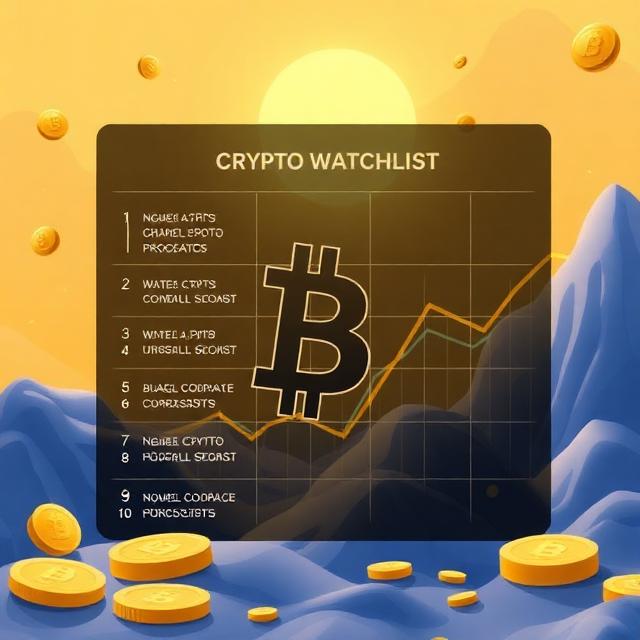
Most crypto investors blow up the same way every cycle. They chase one hot coin, get burned, then chase another, until their portfolio looks like a graveyard of bad bets. A crypto watchlist by sector flips that script. Instead of guessing which token will pump next, you track entire themes like DeFi, AI, real-world assets, and Layer 2 scaling, then rotate capital into whichever sector is heating up. This guide on building a crypto watchlist by sector walks you through the exact framework smart money uses to stay ahead of the market in 2026.
The data backs this approach hard. The RWA sector grew from $5.5 billion to $58.5 billion in market cap. The AI crypto sector held up with only a 14 percent loss when 90 percent of crypto assets crashed. Hyperliquid captured over 70 percent of perpetual DEX volume in a single year. Investors with a proper crypto watchlist by sector caught all three moves early. By the end of this guide, you will know exactly which sectors to track, which tokens belong in each one, and how to rebalance your watchlist when narratives shift. Let’s build it.
Most crypto investors blow up the same way every cycle. They chase one hot coin based on a tweet. They get burned. They chase another. By the end of the cycle, their portfolio looks like a graveyard of bad bets and emotional decisions. A crypto watchlist by sector flips that broken pattern. Instead of guessing which token will pump next, you track entire themes like DeFi, AI, real-world assets, and Layer 2 scaling. When one sector heats up, you already know which tokens to buy.
The data on this approach is brutal in the best way. The RWA sector grew from $5.5 billion to $58.5 billion in market cap over twelve months. The AI crypto sector held up with only a 14 percent loss when 90 percent of crypto assets crashed in March 2026. Hyperliquid captured over 70 percent of perpetual DEX volume in a single year. Investors with a proper crypto watchlist by sector caught all three moves early because they were tracking the categories, not just the prices. That edge is what separates pros from gamblers.
This guide walks you through building a crypto watchlist by sector from scratch. You will learn which sectors matter in 2026, which tokens belong in each one, what tools to use, and how to rebalance when narratives shift. By the end, your watchlist will look like the one a professional analyst keeps on their second monitor. Less stress, better decisions, real returns. Let’s build it. You can see investment in crypto articles.
How to Build a Crypto Watchlist by Sector
How to build a crypto watchlist by sector starts with one mental shift. Stop thinking about coins and start thinking about themes. Every token in crypto belongs to at least one sector. Solana belongs to Layer 1. Aave belongs to DeFi lending. Render belongs to AI compute. When you organize your watchlist this way, patterns become obvious that single-token tracking hides completely.
The first step is picking your tracking platform. CoinGecko and CoinMarketCap both offer free sector filtering and watchlist features that sync across devices. DefiLlama specializes in DeFi metrics with sector-level total value locked tracking. Most serious investors use two or three of these tools together. Pick one as your primary home base for your crypto watchlist by sector and use the others to verify data when something looks off. Free is fine for getting started.
Next, decide how many sectors you want to track. Five to eight is the sweet spot for most retail investors. Fewer than five and you miss too much. More than eight and your watchlist becomes a full-time job. The major 2026 sectors worth tracking are DeFi, AI, RWA, Layer 2, Stablecoins, Privacy/ZK, Prediction Markets, and Decentralized Derivatives. Pick the ones that match your risk tolerance and time horizon, then build from there.
Inside each sector, add three to five tokens. The category leader, one or two challengers, and one speculative play makes a balanced sector lineup. Your DeFi section might hold Aave as the leader, Maker and Compound as challengers, and a smaller play like Pendle for upside exposure. This structure gives you broad coverage without information overload. CoinGecko’s official sector breakdown at CoinGecko’s crypto categories page is the cleanest free resource for finding the top tokens in each sector before you commit names to your list.
Best Crypto Watchlist by Sector 2026
The best crypto watchlist by sector 2026 reflects where capital actually flowed during the past twelve months. Three sectors dominated everything else. Real-world asset tokenization grew over 300 percent year over year. AI crypto held up better than any other sector during market crashes. Decentralized derivatives captured massive market share from centralized exchanges. Building your 2026 watchlist around these three pillars gives you exposure to where smart money is going.
Real-world assets sit at the top of every serious watchlist this year. The RWA market hit $58.5 billion in total market cap. BlackRock’s BUIDL fund crossed $2.5 billion in assets and got listed as collateral on Binance. Ondo Finance and Centrifuge dominated the protocol layer with combined market caps in the billions. Maple Finance led the private credit subsector with $17 billion tokenized. Your best crypto watchlist by sector 2026 should include ONDO, MPL, CFG, and the BUIDL fund as a benchmark for institutional flows.
The AI crypto sector deserves heavy weighting on any 2026 watchlist. Bittensor (TAO) leads with revenue-generating subnets across decentralized machine learning. Render (RNDR) provides GPU compute for AI workloads with consistent demand. NEAR Protocol transformed itself into the front-end for AI agents through chain abstraction. Fetch.ai (FET) and Singularity merged into the Artificial Superintelligence Alliance covering cognitive frameworks. Virtuals Protocol captured the AI agent narrative with revenue-generating bots. The best crypto watchlist by sector 2026 covers all five with proper tracking on weekly performance.
Decentralized derivatives round out the dominant 2026 trio. Hyperliquid commands 70 percent of perpetual DEX market share with $492.7 billion in Q1 2026 volume alone. Its native token HYPE became one of the breakout stories of the year. dYdX continues to compete with v4 chain. GMX and Synthetix hold their corners of the synthetic derivatives market. Adding HYPE, DYDX, GMX, and SNX gives you full exposure to a sector that captured roughly 20 percent of all global perpetual volume by mid-year. Detailed sector performance tracking is documented at CoinDesk’s market data section for daily flow updates.

Crypto Watchlist DeFi AI RWA Sectors
A proper crypto watchlist DeFi AI RWA sectors structure organizes the three biggest narratives into clean buckets. Each bucket needs its own logic, its own metrics, and its own top tokens. Mixing these together creates noise. Separating them gives you signal. Your crypto watchlist by sector should treat DeFi, AI, and RWA as the three core columns with everything else built around them.
DeFi remains the foundation sector even in 2026. Aave became the first DeFi protocol ever to cross $1 trillion in cumulative loans. The total value locked across DeFi held at $95.4 billion despite a Fear and Greed Index sitting at 21. Lending, decentralized exchanges, and yield farming still drive the bulk of on-chain activity. Your DeFi section should include Aave (AAVE), Uniswap (UNI), Maker (MKR), Curve (CRV), and Pendle (PENDLE) for fixed yield exposure. These five cover lending, spot trading, stablecoins, stable swaps, and yield trading respectively.
The AI bucket of your crypto watchlist DeFi AI RWA sectors needs careful curation. The 2024 AI hype cycle pumped 919 projects to a peak of $70 billion before the sector shed 75 percent of its market cap. The tokens that got wiped were almost all AI-themed with no real usage. The survivors had actual revenue or utility. Track Bittensor for decentralized intelligence, Render for GPU compute, NEAR for chain abstraction, ASI for cognitive frameworks, and Virtuals for AI agents. These five are doing the actual work behind the AI agent economy.
The RWA bucket completes the trio. Tokenized US Treasuries grew from $380 million to $14 billion in three years, a 37 times expansion. Private credit hit $17 billion tokenized. Real estate, commodities, and equities are next in line. Track ONDO for tokenized treasuries, Maple for private credit, Centrifuge for real estate and asset-backed lending, Plume for the RWA-focused chain, and Mantra for the regulated RWA stack. The KuCoin research breakdown at KuCoin’s RWA research blog covers each subsector in detail with up-to-date market data.
Crypto Sector Rotation Strategy
A crypto sector rotation strategy is what separates investors who compound from investors who flatline. Capital in crypto moves between sectors in roughly six to twelve month cycles. AI dominated late 2024. RWA dominated all of 2025. Decentralized derivatives broke out in 2026. Each rotation created enormous wealth for investors who saw it coming and devastated those who stayed in the previous narrative too long. Your crypto watchlist by sector exists to catch these rotations before the broader market does.
The simplest sector rotation strategy uses three signals together. Signal one is on-chain volume growth. When a sector’s daily volume rises 30 percent or more for four consecutive weeks, capital is flowing in. Signal two is institutional adoption news. When firms like BlackRock, Fidelity, or major banks announce sector-specific products, that money is committed long term. Signal three is developer activity measured through GitHub commits and new protocol launches. Sectors with rising developer activity become next year’s leaders.
Watch the sectors that are quietly accumulating. RWA spent most of 2024 below $5 billion in market cap before exploding in 2025 and 2026. Investors who tracked tokenized treasuries through 2024 caught a 10x move. The same pattern is starting to show in privacy and zero-knowledge proofs as institutional adoption requires confidential transactions. Prediction markets are another quiet sector with massive 2026 potential after Polymarket’s election success. A good crypto sector rotation strategy keeps you watching these accumulation phases without forcing you to bet too early.
Your rotation timing improves with discipline rules. Take partial profits when a sector exceeds 200 percent gains in under twelve months. Rebalance into underweighted sectors when concentration in your top sector exceeds 40 percent of your watchlist’s total value. Cut sectors completely when they show 12 months of declining volume and developer activity. These three rules prevent both the early exit mistake and the bag-holding mistake. Bloomberg’s institutional crypto coverage at Bloomberg’s crypto section tracks the macro flows that often signal upcoming rotations.
Crypto Watchlist Categories Explained
Crypto watchlist categories explained properly require understanding what each sector actually does. Surface-level definitions trap most investors into wrong assumptions. DeFi is not just trading apps. AI crypto is not just AI-themed tokens. Layer 2 is not just Ethereum scaling. Going one layer deeper into each category reveals the real opportunity and the real risk in your crypto watchlist by sector.
DeFi splits into five subcategories that matter for 2026. Lending protocols like Aave and Compound. Decentralized exchanges like Uniswap and Curve. Stablecoin issuers like Maker and Frax. Liquid staking like Lido and Rocket Pool. Yield platforms like Pendle and Convex. A complete DeFi section on your watchlist tracks at least one leader from each subcategory. This catches subsector rotations within DeFi itself, like the move from spot DEXs to perpetual DEXs that defined 2026.
The AI category breaks into compute, infrastructure, agents, and data. Compute names like Render and Akash power the GPU layer. Infrastructure names like Bittensor and NEAR provide the base layer for decentralized intelligence. Agent names like Virtuals and ai16z build the autonomous bots that interact on-chain. Data names like Ocean Protocol handle the training data marketplace. The crypto watchlist categories explained correctly show why one AI subcategory can pump while another stays flat. Track at least one name from each AI subcategory.
The RWA category splits into treasuries, private credit, real estate, commodities, and equities. Treasuries lead by far with $14 billion tokenized. Private credit follows at $17 billion. Real estate, commodities, and equities are growing fast but smaller. Each subcategory has different risk profiles and different yields. A diversified RWA section on your crypto watchlist by sector hits multiple subcategories so you do not get crushed if one type of asset faces regulatory issues. Investopedia’s overview of asset classes at Investopedia’s asset classes guide translates well from traditional finance into the RWA breakdown.
Organize Crypto Portfolio by Sector
Learning how to organize crypto portfolio by sector takes the watchlist concept and applies it to real money. Your portfolio should reflect your watchlist conviction levels with weighting that matches your time horizon and risk tolerance. A scattered portfolio with random tokens from random sectors will underperform a focused sector-weighted portfolio almost every time. Discipline beats hot tips in crypto, just like it does everywhere else.
Start with target weights for each sector. Conservative investors might run 30 percent in stablecoins and RWAs, 25 percent in major Layer 1s like Bitcoin and Ethereum, 20 percent in DeFi blue chips, 15 percent in AI sector leaders, and 10 percent in speculative plays across smaller sectors. Aggressive investors might flip those weights with heavier exposure to AI and DeFi while keeping less in stablecoins. The point is having a target. Without targets, you drift into whatever pumped last week.
Rebalancing is where most investors fail. When one sector outperforms by a wide margin, that sector grows beyond its target weight automatically. A 20 percent target allocation to AI can balloon into 40 percent of your portfolio after a strong rally. That concentration is risk you did not sign up for. Rebalance quarterly by taking profits from the overweight sector and reallocating to underweighted sectors. This forces you to sell high and buy low without emotion. Organizing crypto portfolio by sector with strict rebalancing rules has historically beaten buy-and-hold by meaningful margins.
Track your portfolio in the same tool you use for your crypto watchlist by sector. CoinGecko, CoinMarketCap, and DeBank all offer portfolio tracking that integrates with major wallets. Tag every position with its sector so your dashboard shows weight breakdowns at a glance. When you see one sector dominating, that is your rebalancing signal. When you see a sector you believe in shrinking below target, that is your buy signal. The Messari research platform at Messari’s research and intelligence platform provides institutional-grade tools for serious investors who want deeper sector analytics.
Top Crypto Sectors to Watch 2026
The top crypto sectors to watch 2026 extend beyond just the big three of DeFi, AI, and RWA. Several emerging sectors offer asymmetric upside if their narratives play out. Smart investors keep these on their radar even if they only allocate small positions. Catching one breakout sector early is enough to outperform the entire market for a year.
Layer 2 scaling deserves a permanent place on every crypto watchlist by sector. Ethereum L2s like Arbitrum, Optimism, and Base capture growing transaction volume each quarter. Bitcoin L2s like Stacks, Rootstock, and Merlin are bringing smart contracts and DeFi to Bitcoin for the first time. The L2 sector grew from a handful of projects to dozens of competing solutions, with Base alone driving massive user growth through Coinbase integration. Watch ARB, OP, BASE-related tokens, STX, and the leading ZK rollup tokens for full coverage.
Privacy and zero-knowledge proofs are quietly accumulating in 2026. Institutional adoption requires confidential transactions, which means privacy is no longer a niche feature. Zcash (ZEC) and Monero (XMR) lead the privacy coin space despite regulatory pressure. ZK protocols like Aztec and Polygon zkEVM provide infrastructure for private DeFi. The privacy sector is the kind of quiet accumulation play that explodes 12 to 18 months after most investors give up on it. Adding two or three privacy tokens to your top crypto sectors to watch 2026 list positions you for that potential breakout.
Prediction markets and stablecoin infrastructure round out the emerging 2026 sectors. Polymarket and Kalshi proved prediction markets can scale during the 2024 elections. The sector is now expanding into weather, corporate earnings, and on-chain metrics. Stablecoins crossed $312 billion in total supply with 50 percent year-over-year growth. Stablechains designed specifically for stablecoin payments became a real category. Pine Labs launched stablecoin cards in nine countries. Adding tokens like Polymarket’s expected token launch, Tether’s WLFI exposure, and Ethena (ENA) gives you exposure to two more high-conviction emerging sectors. The full breakdown of crypto narratives is tracked at CoinGecko’s narrative analysis for ongoing sector intelligence.
How to Pick Tokens for Each Sector on Your Watchlist
Picking the right tokens for each section of your crypto watchlist by sector follows a repeatable framework. Three filters do most of the work. Filter one is market cap and liquidity. Filter two is on-chain revenue or fundamental usage. Filter three is the team and roadmap quality. Tokens that pass all three filters belong on your watchlist. Tokens that fail any single filter usually become dead weight that distracts you from real opportunities.
Market cap and liquidity matter because thin tokens trap your capital. A token with $50 million market cap might look exciting, but if daily volume is only $2 million, exiting a $100,000 position will move the market against you significantly. Stick to tokens with at least $100 million market cap and $10 million daily volume for serious positions. Smaller cap names can stay on your speculation watchlist but should never make up more than 10 percent of your total portfolio.
On-chain revenue separates real protocols from vapor. Token Terminal and DefiLlama both publish revenue data for major DeFi and infrastructure tokens. Look for protocols generating real fees that flow back to token holders or fund continued development. A protocol with $10 million in annual revenue and a $100 million market cap trades at 10 times sales, which is reasonable. The same protocol at $1 billion market cap trades at 100 times sales, which is expensive even by crypto standards. Use these multiples to compare tokens within the same sector.
Team and roadmap quality is the hardest filter to apply but the most important. Check who the founders are. Read recent interviews and conference talks. Review the GitHub activity to see if developers are still shipping. Sectors with rising developer activity outperform sectors with falling developer activity by huge margins over multi-year periods. Your crypto watchlist by sector should favor protocols with active teams that ship regularly and communicate openly with their communities.
Building Watchlist Alerts and Monitoring Systems
Building proper alerts on your crypto watchlist by sector saves you from screen addiction without missing important moves. Most platforms let you set price alerts, percentage move alerts, and volume spike alerts. Use all three. Price alerts catch your specific entry and exit levels. Percentage alerts catch unusual moves that need investigation. Volume alerts catch capital rotation into or out of sectors before price catches up.
Set price alerts at three levels for each token in your watchlist. The first level is your buy zone, where you want to add to positions. The second level is your stop or panic level, where you want to reassess if it gets hit. The third level is your take-profit zone, where you want to lock in gains. Most watchlist apps support all three alert types without any cost. Setting alerts removes emotion from your decisions because the system tells you when something needs attention rather than you constantly checking charts.
Sector-level alerts add another layer of intelligence. When the entire AI sector moves 5 percent in a day or the RWA sector grows by 10 percent in a week, that is the kind of signal you want to know about immediately. Most professional tools like Messari and Token Terminal offer sector-level alerts. Free tools like CoinGecko let you build your own through watchlist groupings. Either way, sector alerts catch macro rotations before individual token alerts catch the resulting price moves.
Daily, weekly, and monthly review rhythms keep your crypto watchlist by sector sharp. Daily checks should take five minutes and focus on overnight moves and breaking news. Weekly reviews should take 30 minutes and cover sector performance, new token launches, and rebalancing decisions. Monthly reviews should take an hour and assess whether your sector weights still match your strategy. Quarterly reviews should take half a day for full portfolio rebalancing. This cadence keeps you informed without burning out on constant monitoring.
Common Mistakes to Avoid With Sector Watchlists
The biggest mistake investors make with their crypto watchlist by sector is overcomplicating it. Adding 50 tokens across 15 sectors looks impressive on screen but produces zero useful information. A focused 25-token watchlist across seven sectors gives you actionable data every day. Less is more. If a token does not have a clear reason to be on your list, remove it. Mental clarity beats data hoarding every time.
Chasing pumping sectors is the second classic trap. By the time a sector gets coverage on mainstream crypto Twitter, the easy money is gone. Your job with a crypto watchlist by sector is to position before the wave, not after it crests. This requires patience and the discipline to buy unloved sectors when they are quiet. The investors who bought RWA in 2024 made the most money. The investors who chased it in late 2025 made decent returns. The investors chasing it now in mid-2026 are mostly buying tops.
Ignoring stablecoins is another common error. Stablecoins are not boring. They are the rails that everything else runs on. The stablecoin market hit $312 billion with 50 percent year-over-year growth. New stablechains are launching to handle stablecoin-specific use cases. Tether and Circle are pushing into payment cards across nine countries. Adding USDC, USDT, DAI, and FRAX to your watchlist as a sector might look strange, but tracking stablecoin supply and flows tells you where capital is sitting between rotations.
Failing to update your sector definitions hurts long-term watchlist performance. The crypto sectors of 2024 are not the crypto sectors of 2026. Decentralized derivatives barely existed as a category two years ago. AI agents emerged from nowhere in 2025. Stablechains are a 2026 invention. Your crypto watchlist by sector needs to absorb new categories as they form and retire old categories that died. Review your sector list every six months and ask which categories still matter and which new ones deserve a slot.
Final Thoughts on Building Your Crypto Watchlist by Sector
A crypto watchlist by sector is the single most powerful tool retail investors can build for free in this market. Professional funds use sector frameworks because they work. Institutional allocators use sector frameworks because they work. The investors who outperform consistently year after year in crypto almost all use sector-based thinking. The tools to do this are free. The data is public. The only thing missing is your decision to do the work.
Start small if the full framework feels overwhelming. Pick three sectors that interest you most. Add three to five tokens in each. Set a few alerts. Check the watchlist twice a week for the first month. Once that habit sticks, expand to seven or eight sectors and start applying real rotation strategy. Inside six months you will know more about crypto sector dynamics than 95 percent of retail investors who randomly chase whatever is trending on Twitter.
The 2026 market favors investors who think in sectors. The volatility is high. The narratives shift fast. The winners and losers within each sector are getting more separated. AI tokens with real revenue gained while AI tokens with vapor lost 75 percent. RWA tokens with institutional partners thrived while pure speculation died. Your crypto watchlist by sector forces you to ask the right questions about every position. What does this token actually do? Which sector does it really belong to? Why am I tracking it instead of the leader?
Build the watchlist this week. Not next month, not after the next pump. This week. Spend two hours organizing your CoinGecko or CoinMarketCap watchlist into clean sector buckets. Add the tokens listed throughout this guide. Set basic price alerts. Schedule a weekly review for Sunday night. By the end of 2026, your decisions will be sharper, your returns will be better, and your portfolio will look like the work of an investor who actually has a process. That is the real value of a crypto watchlist by sector. Process beats prediction every single time.
Disclaimer: This article is for informational and educational purposes only and does not constitute financial advice. Cryptocurrency investments carry significant risks including total loss of capital. Always conduct your own research and consult with a qualified financial advisor before making any investment decisions. Past performance does not guarantee future results.
FAQ about crypto watchlist by sector
A crypto watchlist by sector groups tokens based on what they actually do, like DeFi, AI, real-world assets, gaming, or Layer 2 scaling. This setup helps investors track entire themes instead of chasing individual coins, making sector rotation strategies easier to execute. Live sector performance data and category breakdowns are tracked at CoinGecko’s crypto categories page, which offers the most comprehensive sector classification available.
Sector-based watchlists let you spot trends faster and rotate capital into hot themes before the broader market catches on. The RWA sector grew from $5.5 billion to $29.2 billion in just over a year, and investors who tracked the sector caught that move early. Investopedia’s introduction at Investopedia’s guide to sector investing explains why this approach works in traditional markets too.
The three dominant 2026 narratives are real-world asset tokenization at $58.5 billion market cap, AI crypto with 919 projects worth $22.6 billion combined, and decentralized derivatives led by Hyperliquid with 70 percent perpetual DEX market share. Other major sectors include DeFi, Layer 2 scaling, stablecoins, prediction markets, and privacy/ZK. CoinDesk tracks sector flows and capital rotation at CoinDesk’s market data section for current institutional positioning.
Most successful retail watchlists track between five and eight major sectors, with three to five tokens per sector. This gives you broad market coverage without information overload. Beyond eight sectors, monitoring becomes a full-time job and dilutes your edge. CoinMarketCap’s category page at CoinMarketCap’s cryptocurrency categories lets you filter and compare sectors quickly to identify the ones that match your strategy.
Review your watchlist monthly and rebalance quarterly based on capital flows, on-chain activity, and project fundamentals. Move underperforming sectors with weak metrics down or out, and add tokens from sectors showing institutional adoption signals. Bloomberg covers institutional crypto flows that affect rebalancing decisions at Bloomberg’s crypto coverage, which tracks how major funds adjust their sector exposure each quarter.
Free tools like CoinGecko, CoinMarketCap, and DefiLlama offer built-in sector filtering and watchlist features. For deeper analytics, Messari and TokenTerminal provide on-chain revenue data, while exchanges like Binance and Coinbase offer their own watchlist builders that sync across devices. The full list of sector tracking tools and metrics is documented at Messari’s research platform for serious investors.
Sector watchlists protect you from single-token disasters while letting you ride broader narrative waves. When the AI sector fell only 14 percent during a March 2026 dip while 90 percent of crypto assets posted losses, sector-aware investors sat through the volatility comfortably. The SEC’s investor education on diversification at SEC.gov’s investor publications applies directly to this approach in crypto.
No. A watchlist tracks tokens you are studying or considering, while a portfolio holds the assets you actually own. Smart investors maintain a watchlist that is two to three times larger than their portfolio so they always have new candidates ready when conditions change. Detailed portfolio versus watchlist methodology is covered at Investopedia’s portfolio management section, which translates well from stocks to crypto.

That is why I made my site - Stock Maven. Now that I feel settled and confident about trading, I want to be a source of help to anyone else who might be struggling to break into the crypto market successfully.
My website is full of my tips and tricks, as well as information that I have always found interesting about crypto. My friends and family are sick of hearing me talk about it, so now it’s your turn!
I hope that you stick around and find something useful on my site. Remember, to make it big in crypto, you’ve got to be confident! Go for it and don’t look back.
- Quantum AI Stocks: Best Companies to Watch in 2026 - September 16, 2026
- IonQ vs Rigetti vs D-Wave: Which Is the Best Stock Buy? - September 15, 2026
- Best Quantum Computing ETFs for 2026: Top Funds to Buy - September 14, 2026