

























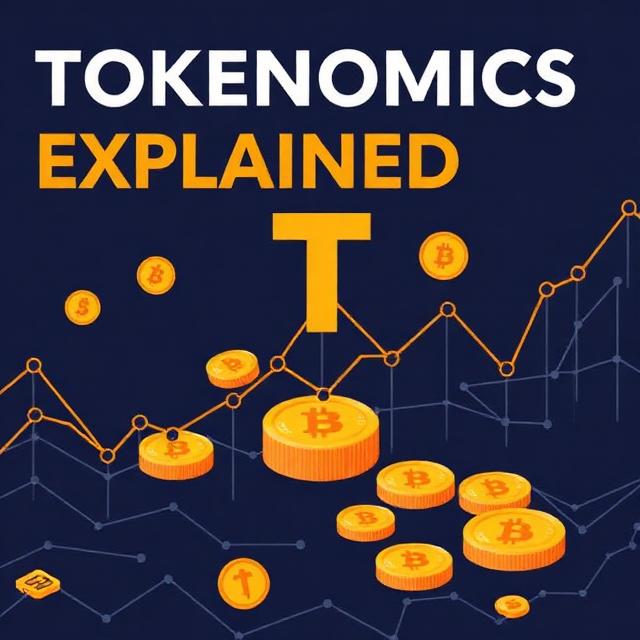
Cryptocurrency markets move quickly, and investors often focus on price charts or market hype. Yet one of the most important factors behind a cryptocurrency’s long term value is its economic design. This concept is known as tokenomics explained, and it plays a major role in determining how digital assets grow, maintain value, or lose investor interest.
Tokenomics refers to the supply, distribution, and incentives built into a cryptocurrency. These elements control how new tokens enter circulation, how scarcity is created, and how users interact with the network. When investors understand tokenomics explained clearly, they gain deeper insight into why certain cryptocurrencies rise in value while others struggle to survive.
Many new investors overlook this part of crypto research. They may buy a token because it is trending on social media or because the price recently increased. However, strong projects usually have carefully designed token economies that encourage adoption, participation, and long term stability.
In this guide, we will break down tokenomics explained in simple terms. You will learn how token supply, distribution models, and utility influence cryptocurrency prices and investment potential. Understanding these fundamentals can help investors evaluate projects more confidently in the rapidly expanding crypto market.
Introduction
Many new investors focus on price charts when they buy cryptocurrency. They watch prices rise and rush to buy before the next surge. This approach often ignores one of the most important ideas in crypto investing. That idea is tokenomics.
Tokenomics explained simply means the economic system behind a cryptocurrency. It describes how tokens are created, distributed, and used. These rules shape how a crypto asset behaves in the market. Investors who understand tokenomics gain a stronger view of long term value.
When tokenomics explained clearly, it becomes easier to see why some projects grow while others fade away. Supply limits, token demand, and real utility all affect price. These elements work together like the gears inside a machine.
A strong crypto project often has well designed tokenomics. The supply is controlled, the token has a clear purpose, and demand grows as the network grows. Weak tokenomics often leads to price drops over time.
In this guide, tokenomics explained will be broken down step by step. You will learn how supply, demand, and token design influence crypto investment markets. Investors who grasp these ideas can make better decisions when choosing projects.
Tokenomics Explained for Crypto Investors
Investors who study tokenomics gain an edge in crypto markets. Tokenomics explained for crypto investors helps reveal the real strength behind a project.
Every cryptocurrency operates under a set of economic rules. These rules control supply, reward systems, and how tokens move through the network. Investors who understand these rules can predict how a token might behave over time.
A strong token model encourages people to hold and use the token. If a token has clear value inside the network, demand often increases. When demand rises faster than supply, price growth becomes more likely.
Crypto investors often review supply data before buying a token. A project with limited supply can attract more long term interest. Bitcoin remains a famous example of this design.
Investopedia provides detailed explanations of how cryptocurrency supply and demand work. Their guides help investors understand the economic forces that shape digital assets.
Tokenomics explained for crypto investors reveals how market value forms beyond simple speculation. Smart investors always check token structure before investing.
Tokenomics Explained with Real Crypto Examples
Understanding theory helps, but real examples bring tokenomics to life. Tokenomics explained with real crypto examples shows how supply and demand affect major projects.
Bitcoin offers the clearest example of strong tokenomics. The total supply is capped at twenty one million coins. This limited supply creates scarcity over time. As demand grows, scarcity pushes prices higher.
Ethereum provides another example of evolving tokenomics. The network introduced a mechanism that burns part of transaction fees. This system reduces circulating supply during high activity periods.
Other projects use different models. Some distribute tokens as rewards to users who help secure the network. Others release tokens gradually through mining or staking.
CoinMarketCap Alexandria explains many real token models and how they shape market behavior. Their guides show how different projects structure supply and incentives.
Tokenomics explained through real examples helps investors recognize patterns. Projects with clear economic design often maintain stronger long term value.
Tokenomics Explained Supply Demand and Utility
Every market runs on supply and demand. Crypto markets follow the same principle. Tokenomics explained supply demand and utility highlights how these forces interact.
Supply refers to the number of tokens available in the market. Demand represents how many people want to buy or use the token. When demand rises faster than supply, prices tend to increase.
Utility plays a large role in this balance. A token with real use attracts more demand. Users may need the token to pay fees, access services, or vote in network decisions.
Without utility, demand fades quickly. Many projects launched during market booms failed because their tokens had no real function. Investors lost interest once speculation faded.
CoinDesk Learn provides clear explanations of how token utility affects crypto networks. Their articles help investors understand how real demand drives long term growth.
Tokenomics explained supply demand and utility shows why value depends on more than hype. Strong demand built on real use creates lasting market strength.
Tokenomics Explained for Beginners Investing in Crypto
Many beginners enter crypto markets without understanding token economics. Tokenomics explained for beginners investing in crypto provides a clear starting point.
New investors often chase trending coins. Social media hype can push prices up quickly. Without understanding supply and demand, beginners may buy near the top of a market cycle.
Learning tokenomics gives beginners a stronger framework. It helps them evaluate whether a token has a sustainable model. This knowledge prevents impulsive decisions.
Beginners should start by examining supply limits and token use. A token that powers a network service often holds stronger long term value.
Investopedia offers simple educational resources for investors who want to understand crypto fundamentals. These guides explain how token supply and demand influence price behavior.
Tokenomics explained for beginners investing in crypto transforms random speculation into thoughtful investing.
Tokenomics Explained Circulating Supply vs Total Supply
Supply metrics often confuse new investors. Tokenomics explained circulating supply vs total supply clarifies this concept.
Circulating supply refers to the number of tokens currently available for trading. These tokens move freely between buyers and sellers in the market.
Total supply includes all tokens that exist, including those locked or reserved. Some tokens remain locked for developers or early investors.
Understanding this difference matters for price evaluation. A token may appear scarce today but have large amounts scheduled for release later.
CoinMarketCap tracks supply data for thousands of cryptocurrencies. Investors often review these metrics before investing.
Tokenomics explained circulating supply vs total supply helps investors understand how future token releases may influence price.
Tokenomics Explained How Token Supply Affects Price
Token supply plays a major role in market behavior. Tokenomics explained how token supply affects price helps investors understand this relationship.
Limited supply often increases scarcity. Scarcity attracts investors who expect future demand to push prices higher.
Bitcoin again offers a strong example. Its fixed supply creates long term scarcity. As adoption grows, demand competes for fewer coins.
Inflation also affects price. Some tokens introduce new supply through staking rewards or mining. If supply grows too quickly, prices may struggle to rise.
CoinDesk Markets tracks price movements and supply dynamics across the crypto sector. Their analysis shows how supply changes influence market trends.
Tokenomics explained how token supply affects price allows investors to anticipate market pressure before it appears.
Tokenomics Explained Crypto Inflation and Token Distribution
Inflation describes how new tokens enter circulation. Tokenomics explained crypto inflation and token distribution reveals how supply expansion affects investors.
Some networks create new tokens as rewards for securing the network. These rewards encourage participation and maintain blockchain security.
Distribution also matters. If developers hold large token allocations, they may influence price movements. Transparent distribution builds trust among investors.
Balanced token distribution spreads ownership across the community. This approach reduces the risk of sudden large sell offs.
The SEC investor education portal discusses risks related to digital assets and token distribution models. These resources help investors identify warning signs.
Tokenomics explained crypto inflation and token distribution highlights the importance of fairness and transparency in project design.
Conclusion
Tokenomics explained is one of the most valuable concepts for crypto investors. Understanding supply, demand, and token utility reveals the forces behind price movements.
Investors who ignore tokenomics often rely on hype. This strategy rarely produces consistent success. Research provides a much stronger foundation.
Strong token design supports long term growth. Limited supply, clear utility, and fair distribution encourage adoption and investor confidence.
As the crypto market grows, projects with strong tokenomics will stand out. Investors who learn tokenomics explained gain a powerful tool for evaluating new opportunities.
Understanding these principles turns crypto investing from guesswork into informed strategy.
FAQ about Tokenomics Explained
Tokenomics refers to the economic structure of a cryptocurrency, including its supply, distribution, and incentives. It helps investors understand how a token gains and maintains value in the market. Investopedia provides a clear overview of cryptocurrency fundamentals here: https://www.investopedia.com/terms/c/cryptocurrency.asp
Tokenomics determines how a cryptocurrency is distributed, how new tokens enter circulation, and how demand is created. Investors study tokenomics to identify projects with sustainable long term growth. CoinMarketCap explains token supply and market mechanics here: https://coinmarketcap.com/alexandria
Circulating supply refers to the number of tokens currently available in the market, while total supply represents the number of tokens that exist overall. Understanding this difference helps investors estimate scarcity and potential price impact. CoinMarketCap tracks supply metrics for thousands of cryptocurrencies here: https://coinmarketcap.com
When supply is limited and demand grows, prices tend to increase. Large token supply or inflation can reduce price growth if demand does not keep up. CoinDesk regularly explains market supply dynamics and price behavior here: https://www.coindesk.com/learn/
Token distribution shows how tokens are allocated among developers, investors, and the community. Uneven distribution can create selling pressure if early holders control large amounts. Bloomberg Crypto covers institutional and token distribution trends here: https://www.bloomberg.com/crypto
Yes. Tokenomics can reveal warning signs such as unlimited supply, heavy insider allocations, or weak token utility. Investors should review token distribution and emission schedules before investing. The SEC provides guidance about risks tied to crypto assets here: https://www.sec.gov/investor
Investors often review project whitepapers, blockchain explorers, and data platforms to study token supply and distribution. These tools provide transparency about how tokens are created and used. CoinMarketCap offers detailed project metrics and research resources here: https://coinmarketcap.com/alexandria

That is why I made my site - Stock Maven. Now that I feel settled and confident about trading, I want to be a source of help to anyone else who might be struggling to break into the crypto market successfully.
My website is full of my tips and tricks, as well as information that I have always found interesting about crypto. My friends and family are sick of hearing me talk about it, so now it’s your turn!
I hope that you stick around and find something useful on my site. Remember, to make it big in crypto, you’ve got to be confident! Go for it and don’t look back.
- What Are Quantum Computing Stocks? A Beginner’s Guide - September 2, 2026
- Quantum Computing Stocks: The Complete Investor’s Guide (2026) - September 1, 2026
- IonQ Stock IONQ Q2 Earnings 2026: What Investors Should Know - August 19, 2026