




























Passive income in crypto sounds simple until you realize the options are not built the same. When people search staking vs lending crypto, they are usually trying to answer one practical question: where can I earn yield without taking on the wrong kind of risk? That is where the comparison matters. Staking can generate rewards by supporting proof-of-stake networks, while lending and other yield products may offer different return profiles, liquidity terms, and risk exposure depending on the platform and structure involved.
In this guide, we break down how staking, crypto lending, and broader yield products work, who each option is best suited for, and what investors need to watch before committing capital. You will see the trade-offs around returns, lock-up periods, platform risk, taxes, and regulation, along with the differences between beginner-friendly strategies and more advanced yield opportunities. By the end, you will have a clearer framework for deciding whether staking, lending, or another crypto yield product fits your goals, risk tolerance, and time horizon.
If you keep seeing the phrase staking vs lending crypto, you are asking the right question. Many people want extra return from coins they already hold. What sounds simple at first gets messy fast once you compare staking, lending, and other yield products. Each path pays in a different way. Each path carries a different kind of risk. Each path also fits a different kind of investor.
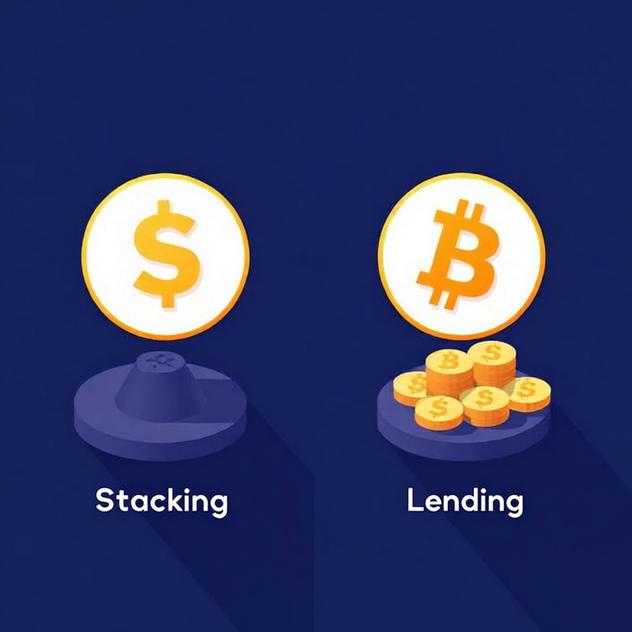
Staking usually means locking eligible proof of stake coins so the network can run and stay secure. In return, the network pays rewards. Lending is different. You hand your crypto to a lending platform or protocol, and that crypto goes to borrowers who pay interest. Yield products sit in a wider group. They can include lending, liquidity pools, and yield farming. The return may come from fees, interest, token rewards, or a mix of all three.
That is why staking vs lending crypto is not just a return question. It is also a control question, a liquidity question, and a risk question. A person who wants stable, simple rewards may lean toward staking. A person who wants more flexibility may look at lending. A person chasing the highest rates may drift toward yield farming, though that usually comes with more moving parts and more ways to lose money. (Figment)
This guide breaks it all down in plain language. You will see how each option works, where the rewards come from, what can go wrong, and how taxes can change the real return. By the end, the choice between staking, lending, and yield products should feel much clearer.
What staking, lending, and yield products really mean?
Before you compare returns, you need clear terms. Staking is tied to proof of stake networks. Ethereum explains that proof of stake works by having validators put value at risk, then check and propose blocks. Honest validators can earn rewards. Bad behavior can lead to penalties, often called slashing. That makes staking a network role first and an income tool second.
Lending works in a more familiar way. Coinbase explains crypto lending as a transaction where one party lends crypto to another in exchange for compensation. The lender earns yield because someone else wants to borrow the asset. That means your return depends on borrower demand, platform design, and the rules of the lending market. It does not come from helping the blockchain run.
Yield products are the broad bucket that confuses most readers. Some platforms market almost everything as an earn product. That can include staking, lending, liquidity pools, and yield farming. Investopedia draws a simple line between staking and yield farming by noting that staking rewards come from the network, while yield farming returns often come from trading fees, interest, or incentive tokens.
This matters because the phrase staking vs lending crypto sounds like a small comparison, but it often hides a much bigger choice. You are deciding whether your coins support a network, fund borrowers, or move through more complex DeFi strategies. Once you see that, the rest of the comparison becomes easier.
Staking vs lending crypto for beginners
For beginners, the best place to start is with the basic source of each reward. In staking, the reward comes from network rules. In lending, the reward comes from borrowers and lending markets. That is the cleanest way to frame staking vs lending crypto for beginners. If you know where the money comes from, you can start judging the risk with more confidence.
Staking is often easier to understand first. You choose a coin that supports proof of stake, such as ETH or other eligible assets on staking platforms. You lock or delegate that coin. Then you earn rewards over time. Coinbase notes that staking does not involve lending out your crypto and is a way to earn rewards while helping the blockchain run. That simple setup makes staking feel more direct to many new investors.
Lending can still be beginner friendly, but it asks you to trust one more layer. You need a platform or protocol that connects lenders and borrowers. You also need to understand what happens if demand falls, collateral fails, or a platform has trouble. Coinbase says crypto lending can happen on centralized or decentralized platforms, and both carry different benefits and risks. A beginner should not treat those choices as small details.
A good rule for a beginner is simple. If you already hold a proof of stake asset and want a cleaner path, staking often makes more sense. If you hold a non staking asset and want yield, lending may be the only option in that pair. In the staking vs lending crypto debate, beginners usually do best when they pick the path they can explain in one sentence. If the product sounds hard to explain, it is too early.

Staking vs lending crypto risks and rewards
The biggest mistake in staking vs lending crypto risks and rewards is focusing only on the rate. A high APY means little if the asset falls hard, the platform fails, or you cannot withdraw when you need to. Rewards are easy to market. Risks take longer to explain. That is why many people underestimate them.
Staking risk starts with the asset itself. If the coin drops in price, your rewards may not cover the loss. There can also be lockup periods, waiting periods to unstake, validator issues, and slashing in some systems. Ethereum states that bad validator behavior can lead to some or all staked ETH being destroyed. Even when you stake through a simple platform, those base network rules still matter.
Lending risk looks different. Here the main issue is often counterparty or platform risk. Your return depends on borrowers paying back, collateral being managed well, and the platform staying solvent. Coinbase explains that lenders place crypto into a lending platform, then borrowers use it under predefined terms. If that chain breaks at any point, the extra yield can vanish quickly. The EU banking and markets authorities also warned that crypto lending can involve liquidity risks, liquidation risks, and weak risk checks.
On the reward side, lending can sometimes show higher rates than basic staking. That is why it tempts people. Yet Figment argues that protocol staking is generally the more conservative option compared with liquidity and lending. The key point is not that one always pays more. It is that each reward is tied to a different risk engine. In staking vs lending crypto, you should compare how the yield is created before you compare the number.
Staking vs lending crypto which is better
People want a clean answer to staking vs lending crypto which is better, but the truth is more personal than that. Better depends on what you own, how long you plan to hold, and how much risk you can take without panicking. A product that fits one investor can be a poor fit for another.
Staking is often better when you already believe in a proof of stake coin and plan to hold it anyway. In that case, staking turns idle coins into working coins. You earn rewards while keeping your main bet the same. You are still exposed to price swings, but the setup lines up with a long hold. This is one reason staking has become the first stop for many ETH and other proof of stake holders.
Lending is often better when your main goal is flexibility or yield on assets that cannot be staked. Stablecoins are a common example. Lending can let you earn on assets that would otherwise sit idle. Yet the safety profile is different. A lender is not just betting on the asset. A lender is also betting on the platform, the collateral system, and borrower demand. That adds more judgment calls.
So which is better in staking vs lending crypto. If you want the cleaner structure, staking usually wins. If you want more asset choice and often more liquidity options, lending may win. If you want the highest rate on paper, yield products may look best, but the risk can climb much faster than the headline yield suggests. Better is the option that still feels smart after you list every way it can fail.
Staking vs lending crypto for passive income
The phrase staking vs lending crypto for passive income sounds attractive because it suggests easy money. In practice, the income is only passive after you do the work of picking the right setup. You still need to study the asset, the platform, withdrawal rules, and the way rates can change. Passive does not mean risk free.
Staking can fit passive income well because the process is often simple once set up. Investopedia notes that staking locks up tokens to help maintain a proof of stake network and pays regular rewards in return. If you are already planning to hold the coin for months or years, staking can feel like the most natural add on. You are not changing your core position. You are just putting it to work.
Lending can also support passive income, though the path is less direct. The income comes from borrower activity and platform rules. On some services, rates shift often. On others, terms are fixed for a set period. Stablecoin lending can look attractive because the base asset may swing less than major altcoins. Yet stable does not mean safe in every platform or market condition. The extra income always comes with extra trust.
When people compare staking vs lending crypto for passive income, they should think about sleep quality as much as yield. If you want a slower, cleaner setup on a coin you already trust, staking often fits. If you want income on assets that do not stake, or you need more product choices, lending can fill the gap. The best passive income tool is the one you do not feel forced to watch every hour.
Staking vs lending crypto taxes explained
Taxes can change the whole staking vs lending crypto decision. A product that looks great before tax can feel much weaker after you report the income and track the basis. This part gets ignored too often because it is less exciting than APY. It still matters because taxes affect the real return you keep.
The IRS says digital assets are treated as property for U.S. tax purposes. Its virtual currency FAQ also states that general tax principles for property apply to crypto transactions. That means you cannot think about rewards in a vacuum. Income, sales, swaps, and later gains or losses may all matter. If you receive rewards, then later sell the asset, there can be more than one tax event in the full life cycle.
For many taxpayers, staking rewards and lending rewards can both create taxable income when received, based on fair market value at that time. The IRS newsroom also says taxpayers must report digital asset related income and answer the digital asset question on their return when required. This is where record keeping becomes a real issue. You need dates, values, and a clean trail of what was earned and when.
In staking vs lending crypto taxes explained, the winner is usually the option that you can track with less pain. If one platform gives clear records and another gives weak exports, that matters. A slightly lower yield with better tax records can be the smarter move. Tax drag is real, and messy records can turn a small crypto side strategy into a major headache.
Staking vs lending crypto vs yield farming
The full version of the question is often staking vs lending crypto vs yield farming. Once people hear that yield farming can offer bigger returns, they want to know if staking and lending are just the safer, lower paying cousins. In some cases, that is close to the truth. Yet the deeper point is that yield farming is usually more layered. More layers mean more things can break.
Investopedia explains that staking rewards come from the network, while yield farming returns often come from trading fees, interest, or incentive tokens. Coinbase describes yield farming as allocating digital assets into a DeFi protocol to receive rewards, often in the protocol token. That setup can create attractive rates, though the rate may depend on token prices, pool demand, and changing incentives. It is not the same as a steady savings product.
Yield farming can also expose you to risks that simple staking does not. Smart contract risk, liquidity pool changes, reward token drops, and changing market depth can all reduce the real return. Even if the APY looks huge on screen, the actual outcome can be much lower once price changes and fees are counted. That is why many investors treat yield farming as an advanced strategy, not a starter path. (CoinMarketCap)
In staking vs lending crypto vs yield farming, think of the options as a ladder. Staking is usually the simplest step. Lending sits in the middle because it adds borrower and platform risk. Yield farming sits higher because it often stacks market, platform, token, and contract risk all at once. The bigger rate is not free money. It is usually payment for taking on more uncertainty.
Staking vs lending crypto for long-term investors
For a long term investor, the staking vs lending crypto choice should line up with the original reason for owning the asset. If you bought a proof of stake coin because you trust the network and plan to hold for years, staking often fits that plan well. If you hold stablecoins or non staking assets and want income without selling, lending may be a better match. The key is alignment.
Long term investors usually care about three things. They care about staying invested, avoiding forced selling, and earning extra return without taking wild new risks. Staking can help with that if you are already committed to the asset. The reward adds to your holdings over time, and the setup supports the network you already believe in. That makes the strategy feel more coherent over long periods.
Lending can still work for long term investors, though it asks a different question. Are you comfortable letting your long term holdings depend on a third party or protocol? Some investors are. Others are not. This is where platform history, transparency, collateral rules, and withdrawal terms matter more than the raw rate. Long term investors should be hard to impress. A small yield boost is not worth a large trust gap.
So in staking vs lending crypto for long-term investors, staking often wins when the asset itself is the long term conviction. Lending can work best when the goal is yield on stablecoins or other non staking assets. The real test is simple. If a product forces you to watch it every day, it may not fit a long hold, even if the rate looks good today. (Investopedia)
How liquidity changes the choice?
Liquidity is one of the most useful filters in staking vs lending crypto. It tells you how easy it is to move your money when your plans change. A person may accept lower returns for better access. Another person may accept lockups because they know they will not touch the coins for a long time. Both choices can make sense.
Staking can limit liquidity. Some networks or services have waiting periods before rewards start, and some have unstaking delays before you can move funds again. Coinbase warns users to understand wait times to start earning or unstake before they commit assets. That may not matter during calm markets. It matters a lot when prices move fast or you need cash. Yo can see the crypto managment article.
Lending terms vary. Some platforms allow flexible deposits and withdrawals. Others pay more for fixed terms or tighter rules. The rate you see may reflect how much liquidity you give up. That is why comparing staking and lending on yield alone can mislead. Two products with the same rate can feel very different if one lets you exit today and the other makes you wait.
If liquidity matters a lot to you, put it near the top of your decision list. In staking vs lending crypto, the best looking yield can become the worst choice if you cannot access funds when your plan changes. People often learn that point after the fact. It is better to make it part of the first screen.
Why APY can fool people?
Many crypto users make the staking vs lending crypto choice by chasing the largest APY on a product page. That is a weak way to choose. APY and APR can be useful, but only when you know what they include and how the rate is created. Coinbase notes that both APY and APR are common ways to measure compensation from staking, lending, and yield farming, but they represent different ideas.
A high APY can hide many things. The rate may depend on reward tokens that can drop in price. The rate may change every day. It may assume rewards are reinvested. It may also look strong only because the base asset is risky. You can earn more units of a coin and still lose money if the coin falls far enough. That is why headline yield needs context. (Coinbase)
This matters in staking vs lending crypto because the source of return changes what the rate means. Staking rates come from network design and validator participation. Lending rates come from supply and demand in lending markets. Yield farming rates may include incentive tokens and fee sharing. The same number on screen can hide three very different stories under the hood.
A smarter move is to ask four questions before you care about the rate. Where does the reward come from. How often can it change. What can reduce it in real life. What happens if the market turns ugly. That simple habit can save you from many bad yield choices.
Custody, trust, and who holds the keys
Another major difference in staking vs lending crypto is custody. Who holds the assets while they generate yield matters more than many new users think. The answer affects control, platform risk, and your ability to react when markets get rough.
With native staking or some delegated staking setups, you may still keep more direct alignment with the network itself. The details vary by chain and service, but the core purpose is still protocol security. With lending, the arrangement often feels closer to handing assets to a financial product. Coinbase says lending platforms act as intermediaries between lenders and borrowers, whether centralized or decentralized. That adds a layer between you and your coins.
Figment makes this difference sharper by noting that some decentralized lending setups can be non custodial, while centralized lenders control the keys to customer assets. That distinction should not be treated like a footnote. A non custodial design and a centralized balance sheet are not the same thing, even if both promise yield on the front page. (Figment)
In staking vs lending crypto, ask yourself how much trust you want to place outside the base network. Some people are fine with a trusted third party. Some are not. The right answer is personal. What is not personal is the fact that trust layers change the risk. Once you see that, many yield offers become much easier to judge.
How to choose without overthinking it?
At this point, staking vs lending crypto may still feel like a lot. The easiest way to cut through the noise is to start with the asset, then move to the goal, then move to the risk. If you start with the rate, you usually end up with a weaker choice.
Start with the asset. Can it be staked natively or through a reliable staking service. If yes, and you already planned to hold it, staking deserves a hard look. If the asset cannot be staked, then staking is off the table and lending or another yield product may be the only yield path. That one step removes a lot of confusion right away.
Next, think about the goal. If your goal is simple passive income with less complexity, staking often fits better. If your goal is yield on stablecoins or wider asset choice, lending may fit better. If your goal is to maximize return and you accept more risk and more work, yield farming may enter the picture. Goals should filter products, not the other way around.
Last, test your own stress level. Could you handle a lockup, a rate cut, a platform issue, or a reward token drop without making a bad move. If the honest answer is no, choose the simpler path. In staking vs lending crypto, the best choice is often the one that keeps you calm enough to stick to it. (European Banking Authority)
Final thoughts on staking vs lending crypto
The best answer to staking vs lending crypto is rarely a one size fits all rule. Staking usually works best when you already own a proof of stake asset, trust the network, and want a cleaner reward model. Lending usually works best when you want yield on assets that cannot be staked, or you want more flexibility in what you lend. Yield farming can pay more, but it usually asks you to take on more layers of risk.
If you are new, start simple. If you are focused on passive income, think about stability, not just rate. If you are a long term investor, make sure the product matches the reason you bought the asset in the first place. If taxes and records look messy, count that as a real cost. And if the product feels hard to explain in plain language, it is usually a sign to slow down.
That is the cleanest way to look at staking vs lending crypto. Staking pays you for helping secure a network. Lending pays you for funding borrowers. Yield farming pays you for joining more complex DeFi activity. None of those paths is magic. Each one trades risk, return, control, and liquidity in a different way. When you judge them on those terms, the right choice gets much easier to see.
For external references, the section headings link to strong sources that rank prominently in search results and explain the core topic behind each long-tail keyword. Those links include Coinbase, Investopedia, Ethereum.org, and the IRS, which are among the most widely cited authorities for these subjects.
FAQ About staking vs lending crypto
Staking usually means locking eligible proof-of-stake coins to help secure a blockchain and earn network rewards, while crypto lending means providing assets to borrowers or platforms in exchange for interest. Coinbase’s staking overview and Kraken’s crypto loans guide explain the distinction clearly.
In many cases, yes. Staking tends to be simpler and tied to blockchain validation, while yield products such as lending and yield farming can add counterparty, platform, and smart contract risk; Investopedia’s guide to crypto yield farming and staking outlines those trade-offs well.
Yes. Some assets do not support native staking, but they may still generate yield through lending, liquidity provision, or platform-based earn products. For example, Investopedia’s XRP guide notes that XRP income opportunities come from lending and liquidity pools rather than staking.
In the United States, rewards and other digital asset income generally must be reported on your tax return. The IRS digital assets page and its digital asset income guidance are solid starting points for current reporting expectations.
Regulation depends on the structure of the product and the jurisdiction, but U.S. regulators have repeatedly warned investors to use caution with crypto asset services and securities-like yield offerings. The SEC’s investor alert on crypto asset securities is a useful reference point.
For many beginners, staking is easier to understand because the return typically comes from supporting a proof-of-stake network rather than underwriting borrower or protocol risk. Coinbase’s staking explainer and Investopedia’s passive-income guide both position staking as a more straightforward entry point.
Investor interest has widened as yield-bearing products evolve and face stronger disclosure and regulatory scrutiny, especially around stablecoin and institutional yield structures. Recent reporting from CoinDesk on evolving yield and staking products reflects that shift.

That is why I made my site - Stock Maven. Now that I feel settled and confident about trading, I want to be a source of help to anyone else who might be struggling to break into the crypto market successfully.
My website is full of my tips and tricks, as well as information that I have always found interesting about crypto. My friends and family are sick of hearing me talk about it, so now it’s your turn!
I hope that you stick around and find something useful on my site. Remember, to make it big in crypto, you’ve got to be confident! Go for it and don’t look back.
- Quantum AI Stocks: Best Companies to Watch in 2026 - September 16, 2026
- IonQ vs Rigetti vs D-Wave: Which Is the Best Stock Buy? - September 15, 2026
- Best Quantum Computing ETFs for 2026: Top Funds to Buy - September 14, 2026