


























If you have spent any time in DeFi, you have probably seen the phrase liquidity pools explained pop up again and again. That is because liquidity pools sit at the center of how many decentralized exchanges actually work. Instead of matching buyers and sellers through a traditional order book, platforms like Uniswap use pools of tokens locked in smart contracts so trades can happen against those reserves. Coinbase describes liquidity pools as protocols that combine two or more tokens into a smart contract to provide liquidity for trading, while Uniswap explains that anyone can add equal value of both assets and receive pool tokens that track their share.
This article will break down liquidity pools in simple terms for investors. It will explain how pools work, how liquidity providers earn rewards, what LP tokens are, and why risks like impermanent loss matter. For readers trying to understand DeFi without getting buried in jargon, this guide is designed to make the mechanics, benefits, and trade-offs of liquidity pools much easier to evaluate.
If you have spent any time in crypto, you have likely heard people talk about liquidity pools. You may have also seen terms like LP tokens, AMMs, DeFi yields, and impermanent loss. At first, it can feel like too much at once. The good news is that the idea behind liquidity pools is simple once you strip away the jargon.
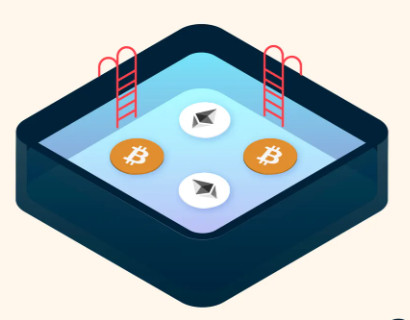
Liquidity pools explained in plain English means this: a liquidity pool is a pot of crypto locked in a smart contract so people can trade without needing a normal buyer and seller to meet at the same time. That pool gives traders instant access to swaps, and it gives liquidity providers a way to earn fees. This basic setup powers a large part of decentralized finance, also called DeFi. Uniswap describes an automated market maker as a system that replaces the traditional order book with pools of tokens held in smart contracts. Chainlink also defines liquidity pools as crowdsourced crypto locked in smart contracts that provide the liquidity needed for decentralized trading and other financial activity.
In a normal market, trades often rely on an order book. Buyers place bids. Sellers place asks. A trade happens when both sides match. In many DeFi apps, that system is replaced by a pool of assets and a pricing formula. Traders swap against the pool, not directly with another person. Uniswap explains that AMMs use token pools instead of order books, while the XRP Ledger documentation states that each AMM pool holds two assets and sets an exchange rate with a mathematical formula.
This matters because liquidity is what makes a market usable. If there is not enough liquidity, trades become slow, expensive, and rough on price. A large pool usually means better trade flow and less slippage for many transactions. Kraken notes that liquidity providers deposit assets into smart contracts to support trading and earn part of transaction fees. Uniswap adds that deeper pool depth can help traders swap more efficiently with lower slippage.
This guide will walk through liquidity pools explained from the ground up. You will learn how they work, where LP tokens fit in, how pools support DEX trading, why impermanent loss matters, and how liquidity pools compare with staking. You will also see where the passive income angle is real, and where people get burned by chasing high yields without understanding the risk.
Liquidity Pools Explained for Beginners
The easiest way to understand liquidity pools is to think of them as shared trading inventory. A group of users deposits crypto into a smart contract. That contract holds the assets so traders can swap one token for another at any time. BitPay explains liquidity pools as collections of crypto held in smart contracts to facilitate transactions, and Gemini describes them as a way to let users buy and sell on decentralized exchanges without centralized market makers.
Let’s make it simple. Imagine a pool that holds ETH and USDC. If a trader wants to swap USDC for ETH, they do not need to wait for a seller to show up. They trade against the pool. The pool sends out ETH and takes in USDC. The smart contract adjusts the amount left in the pool and updates the price based on its formula. That is the basic engine behind many decentralized exchanges. Uniswap says AMMs replace order books with pools of two tokens, and XRP Ledger says the AMM rate is set by a formula tied to the assets inside the pool.
The people who add tokens to the pool are called liquidity providers. They help keep the pool usable for traders. In return, they usually earn a share of trading fees. That is one reason liquidity pools became popular so quickly. They turned passive token holders into participants in the market. Kraken states that providers earn part of the transaction fees, and Uniswap says liquidity provisioners can earn a share of trading fees and, in some cases, extra rewards.
For beginners, the biggest mental shift is this: you are not lending to a company, and you are not staking in the classic proof of stake sense. You are adding assets to a pool that helps other users trade. Your return comes from pool activity, fee sharing, and sometimes token rewards. Your risk comes from price movement, smart contract failure, low volume, and poor token quality. That is why liquidity pools explained for beginners should never stop at “earn yield.” The yield only matters if you also understand the trade-offs. Coinbase explains that price changes inside pools can create impermanent loss, and Binance Academy notes that those losses rise as the price ratio of the deposited assets changes more sharply.
Another point beginners often miss is that not all pools are equal. A stablecoin pool is very different from a pool holding a volatile meme coin and ETH. The first may offer steadier price behavior. The second may offer bigger rewards, but it can also swing hard. The more unstable the pair, the more care you need. Passive income always sounds good. Smart money starts by asking what could break first.
Liquidity Pools Explained in DeFi
Liquidity pools explained in DeFi means looking at the wider role they play beyond simple token swaps. In decentralized finance, these pools act like core plumbing. They are not just for trading. They also support lending markets, yield farming systems, synthetic assets, and onchain price discovery. Chainlink describes liquidity pools as essential for decentralized trading, lending, and other financial activity without centralized middlemen. Binance also says liquidity pools are used for decentralized trading, lending, and many other functions across DeFi.
This is one reason liquidity pools became so central to DeFi. Traditional finance relies on banks, brokers, or market makers to connect capital with demand. In DeFi, smart contracts take on much of that role. The pool becomes the shared source of funds. The code handles deposits, withdrawals, swaps, and fee distribution. That setup lowers the barrier to entry, but it also moves trust from human institutions to code quality and protocol design. Chainlink says these pools are crowdsourced and locked in smart contracts, while Uniswap explains that liquidity provisioning is permissionless and onchain.
AMMs sit at the center of this model. An automated market maker uses a formula to price assets based on the balance inside a pool. The classic example is the constant product model, where the product of the token balances stays constant as trades happen. You do not need to memorize the math to understand the effect. Large trades move the pool balance more, which can move price more. Smaller trades in deep pools tend to have less impact. Uniswap explains that AMMs replace order books with liquidity pools, and the XRP Ledger docs confirm that each AMM holds two assets and prices swaps with a formula.
In DeFi, pool design also shapes user behavior. A pool with steady trading volume and healthy liquidity can attract more providers, which can tighten pricing and support more activity. A weak pool can fade quickly if volume dries up or if token trust falls. That means DeFi is not just about code. It is also about incentives. Providers go where fees and rewards look attractive. Traders go where pricing and slippage look favorable. Protocols compete by trying to balance both sides.
The wider point is simple. Liquidity pools explained in DeFi is really a story about shared capital managed by code. They help replace older financial gatekeepers with open systems anyone can use. That is the promise. The risk is that open systems also attract weak projects, bad token design, and unsafe contracts. So while liquidity pools are one of DeFi’s best ideas, they reward careful users far more than careless ones.
Liquidity Pools Explained and LP Tokens
When you deposit assets into a liquidity pool, you usually receive something called LP tokens. These tokens act like a receipt for your share of the pool. Bitcoin.com defines LP tokens as digital assets that represent an individual’s share in a decentralized exchange liquidity pool. Binance says LP tokens denote your share in the pool and allow you to recover your deposit plus earned fees.
This part matters because the pool needs a clean way to track ownership. If ten people add funds, the protocol has to know who owns what portion when they come back to withdraw. LP tokens solve that problem. If you own a certain share of the pool, your LP tokens prove it. When you redeem them, the smart contract calculates your share based on the current pool balances. That means you do not get back the exact same token amounts you put in. You get back your share of whatever the pool holds at that moment. Bitcoin.com and the XRP Ledger docs both describe LP tokens as representing pool ownership and enabling providers to claim their position.
LP tokens can also be used in other DeFi apps. In some systems, users stake LP tokens elsewhere to earn added rewards. This is part of what helped fuel yield farming. A person could provide liquidity, receive LP tokens, and then use those LP tokens in another protocol to chase more return. That structure can raise earnings, but it also adds extra layers of risk. More smart contracts mean more failure points. More incentives can also hide the fact that the base pool itself may not be strong.
There is also a security lesson here. If LP tokens represent your claim on pool funds, losing access to them can become a major problem. Binance states that part of your deposit safety depends on holding onto your LP tokens because they allow you to recover your participation in the pool.
Another thing to watch is what the LP token does not tell you on its own. It shows your share. It does not promise profit. That depends on fees earned, rewards paid, price movement, and pool quality. Many new users assume LP tokens always mean income. They do not. They mean ownership of a pool position. That position can gain value, lose value, or underperform a simple buy and hold strategy. Liquidity pools explained and LP tokens makes more sense when you see LP tokens as accounting tools first, and income tools second.
You can see this article too: Investment in Crypto
How Liquidity Pools Explained Help DEX Trading
A decentralized exchange, or DEX, needs some way to make trading work without a central operator and without a classic order book model. Liquidity pools solve that. Uniswap explains that AMMs replace the traditional order book with liquidity pools that hold balances of two tokens. XRP Ledger also says AMMs in a DEX hold pools of two assets and let users swap between them at a formula-based rate.
This changes the trading experience in a few important ways. First, traders can swap directly against available pool liquidity instead of waiting for a matching counterparty. That can make trading feel faster and more open. Second, pricing depends on pool balances, so large trades can shift price more sharply if the pool is small. Third, the depth of the pool often shapes slippage. Deep pools tend to handle normal trades better than shallow ones. Uniswap says higher pool depth can help traders swap with less slippage, while Kraken links provider deposits directly to better market liquidity and ongoing trading.
Liquidity pools also help DEX trading stay open around the clock. A centralized market can pause, restrict access, or rely on a closed operator. A DEX pool remains usable as long as the blockchain and the smart contract remain active. That open access is one of the biggest reasons crypto users embraced decentralized exchanges in the first place. Gemini notes that liquidity pools let users buy and sell on decentralized platforms without centralized market makers.
Still, open access does not mean perfect execution. DEX traders need to watch slippage, fees, token quality, and front-running risk. A low-liquidity pool can look active, yet still give poor execution on bigger trades. A pool with strange token economics can look profitable for providers, yet create poor pricing for traders. So liquidity pools explained help DEX trading because they make trading possible at scale without order books, but the best trading still happens in pools with depth, trust, and steady volume.
There is also a bigger market point here. Pools help smaller tokens get listed and traded without relying on a centralized exchange approval process. That can support innovation. It can also flood the market with weak assets. So while liquidity pools make DEX trading more open, they also place more responsibility on users. The pool lets the trade happen. It does not tell you whether the trade is smart.
Liquidity Pools Explained and Impermanent Loss
If there is one topic every liquidity provider needs to understand, it is impermanent loss. Coinbase defines impermanent loss as the situation where the compensation from allocating tokens to a liquidity pool is less than what you would have received by just holding the asset. Binance Academy adds that impermanent loss happens when the price ratio of your deposited tokens changes compared with the ratio at deposit, and the risk grows when that change becomes larger.
Here is the simple version. You deposit two tokens into a pool. If one token rises a lot relative to the other, the pool rebalances as traders arbitrage the price difference. You end up holding less of the token that went up and more of the token that lagged. When you withdraw, your total value may be lower than if you had simply held both assets in your wallet the whole time. That gap is the loss. It is called impermanent because it can shrink if prices return to the original ratio, but it becomes real once you withdraw at a bad ratio. Coinbase and Crypto.com both explain impermanent loss in these terms.
This is why high APR numbers can fool people. A pool may show strong fee income or token rewards, yet still leave you worse off after sharp price movement. The bigger the volatility gap between the two assets, the bigger the risk tends to be. Stablecoin pairs often carry lower impermanent loss risk because their prices tend to stay closer together. Volatile pairs can create larger swings. Binance Academy notes that bigger changes in the asset ratio create greater potential loss relative to holding.
A practical example helps. Say you add ETH and USDC to a pool. ETH then doubles in price. Traders buy ETH from the pool because it is cheaper there until the pool price catches up. Your share of the pool now contains less ETH and more USDC than before. You still earned fees, but those fees may not fully offset the value you gave up by selling some ETH into strength through the AMM process. That is impermanent loss in action.
This does not mean liquidity pools are bad. It means returns need to be judged against the right baseline. The real question is not “Did I earn fees?” The real question is “Did I do better than holding the assets?” If the answer is no, then the yield was not as attractive as it first looked. Liquidity pools explained and impermanent loss belongs in every serious DeFi guide because too many people learn this lesson after the damage is done.
Liquidity Pools Explained vs Staking
Liquidity pools and staking often get grouped together because both can produce yield. That is where the similarity starts and ends. Coinbase explains that staking, traditional staking, and pool staking are different systems tied to how networks secure themselves and how rewards are distributed. By contrast, liquidity pools are built to support trading, not chain validation. Metadev3 also states that staking focuses on network security, while liquidity pools aim to facilitate DeFi trading and ensure transaction liquidity.
When you stake, you usually lock or delegate a token to support a proof of stake network. Your rewards come from network rules, validation activity, and protocol emissions. When you provide liquidity, you deposit token pairs into a pool that traders use. Your return comes from swap fees and, in some cases, extra incentives. These are different income engines. One supports blockchain consensus. The other supports trading activity. Coinbase and Metadev3 both make that difference clear.
The risk profile also differs. Staking risk often centers on token price movement, lockup rules, validator quality, and slashing in some networks. Liquidity pool risk includes token price movement too, but it adds impermanent loss, pool imbalance, low trading volume, and pair quality. That means liquidity provision often needs more active thought than simple staking. A person can stake a major proof of stake asset and mostly monitor price and unlock terms. A person in a liquidity pool must also watch volume, price ratios, and reward changes.
Liquidity pools explained vs staking comes down to purpose, return source, and risk structure. Staking may feel easier for long-term holders who want simpler yield. Liquidity pools may suit users who understand DeFi better and are willing to monitor positions more closely. Neither is “better” in every case. The better choice depends on the token, the protocol, the market cycle, and your risk tolerance.
There is also a habit problem in crypto. Many users chase the bigger number. If a pool says 28 percent and staking says 6 percent, the pool looks better. That view is too shallow. Higher yield often reflects higher risk, weaker token quality, or short-term incentives that may not last. A lower return with cleaner risk can beat a higher return that falls apart under volatility. That is why comparing liquidity pools and staking needs more than a glance at APY.
Liquidity Pools Explained for Passive Income
Many people search for liquidity pools because they want passive income. That goal is not wrong. Liquidity pools can produce income through swap fees and incentive rewards. Kraken says providers deposit crypto into smart contracts, support trading, and earn a portion of transaction fees. CoinTracker also notes that contributors earn a share of the fees generated within the pool, which can create a source of passive income.
The key word is can. Passive income from liquidity pools is not automatic and it is not fixed. It depends on real trading activity. A pool with no volume may offer very little fee income. A pool with wild incentives may look rich at first, then lose value as the reward token drops. A pool with strong volume may still underperform if impermanent loss eats too much of the fee revenue. So the passive income story is real, but only when you judge the full picture. Kraken and Chainlink both tie liquidity provision to fee earning, but neither suggests that yield comes without trade-offs.
The strongest passive income setups often come from boring choices. Deep pools. Trusted protocols. Established token pairs. Stable fee flow. Measured expectations. That may not sound exciting, but it is usually more durable than chasing the newest pool with the loudest APR. Crypto history is full of users who went hunting for huge yields and came back with weak tokens, broken contracts, or losses they did not expect.
It also helps to separate passive from hands-off. A liquidity pool can generate income while you are not trading, but the position still needs review. You should check pool volume, reward terms, token exposure, and your exit plan. Hands-off thinking is where many DeFi mistakes begin. The smart approach is light monitoring, not blind trust.
Liquidity pools explained for passive income should always include one honest sentence: fees are only one side of the result. Your net return depends on fees, token prices, incentives, and withdrawal timing. People who understand that tend to stay longer in the market. People who only see “earn while you sleep” often learn the hard way.
Choosing a Liquidity Pool Without Guesswork
By this point, the main ideas should be clear. The next step is knowing how to judge a pool with some common sense. Start with the token pair. Ask whether both assets are strong enough to hold on their own. If you would not hold either token outside the pool, adding them to a pool usually does not make them safer.
Next, look at the protocol itself. The biggest names in DeFi got big because users trusted their contracts, liquidity depth, and long-term activity more than smaller projects. That trust is never perfect, but it matters. Chainlink describes liquidity pools as core parts of decentralized financial systems, and Uniswap explains how permissionless onchain liquidity supports efficient trading when pool depth is strong.
Then think about volume. A pool only earns useful trading fees if people actually trade through it. A high-fee pool with almost no volume may disappoint. A lower-fee pool with steady activity may outperform over time. Volume also tells you something about whether the market trusts that pair enough to use it often.
You also need to match the pool to your own goal. If you want lower stress, stable pairs may make more sense than volatile token pairs. If you are willing to accept more movement, you may consider other pools, but only after comparing the reward against the added risk. The decision should come from the structure of the position, not from hype in a chat room.
The best liquidity provider is often the least emotional one. They do not chase every new yield. They do not assume a reward token will hold value forever. They do not confuse fee income with total return. They understand what the pool is built to do, and they accept that every yield source comes with a cost.
Common Mistakes People Make With Liquidity Pools
One common mistake is joining a pool without understanding the asset pair. New users often focus on the yield and ignore the tokens. If one token collapses, the pool position can turn ugly quickly. The pool does not protect you from bad assets. It only gives those assets a place to trade.
Another mistake is ignoring impermanent loss until withdrawal day. People see fees come in and think the position is working. Then they compare the result with simple holding and realize they fell behind. Coinbase and Binance Academy both explain that impermanent loss can leave providers worse off than holding when asset prices move sharply.
A third mistake is treating LP tokens like free extra value instead of proof of ownership. LP tokens matter because they represent your claim on the pool. They are not a guarantee of gain. Bitcoin.com and Binance both make clear that LP tokens track your share and allow you to recover your position.
The last big mistake is trusting huge APY numbers without asking where the return comes from. Some returns come from real fees. Some come from inflationary reward tokens. Some come from short-term campaigns meant to attract capital. If the source of return is weak, the headline number will not save you.
Liquidity pools explained in simple terms means users place two crypto assets into a shared pool. That pool then helps traders swap tokens without a normal order book. When people search for liquidity pools explained, they usually want a clear answer without complex math. The core idea is that liquidity pools keep decentralized trading active.
A big reason people look up liquidity pools explained is because DeFi can seem confusing at first. Many new investors hear about yield, pools, and AMMs without knowing how they connect. Liquidity pools explained for everyday readers should always start with the basic role of the pool. It exists to make token swaps easier on decentralized exchanges.
When teaching liquidity pools explained for beginners, it helps to focus on what happens inside the pool. One user adds assets. Another user trades against those assets. The smart contract manages the balance and updates the pricing. That is why liquidity pools explained for beginners should focus on function before profit.
Liquidity pools explained in DeFi is really about how decentralized apps replace middlemen with code. Instead of a company holding funds and matching trades, the smart contract does the work. This is one reason liquidity pools explained in DeFi has become such a common search term. People want to know how DeFi works under the hood.
Many readers also search liquidity pools explained and LP tokens because LP tokens are a major part of the system. These tokens show your share of the pool after you deposit funds. Liquidity pools explained and LP tokens go hand in hand because you cannot fully understand pool ownership without them. LP tokens act as proof that part of the pool belongs to you.
Another common topic is how liquidity pools explained help DEX trading. The answer is simple. Without liquidity pools, many decentralized exchanges would struggle to process swaps in a smooth way. Liquidity pools explained help DEX trading because they provide the token inventory needed for users to trade at any time. That makes DEX platforms more open and more active.
Liquidity pools explained and impermanent loss is one of the most important parts of this topic. A lot of people join pools for rewards and ignore the risk of price changes. Liquidity pools explained and impermanent loss should always be covered together because fee income alone does not tell the full story. A pool can earn fees and still underperform simple holding.
When comparing liquidity pools explained vs staking, the difference becomes clear once you look at the purpose of each one. Staking usually supports blockchain security. Liquidity pools support trading activity. That is why liquidity pools explained vs staking is such an important comparison for new crypto users deciding where to park their assets.
Some investors search liquidity pools explained for passive income because they want their crypto to work for them. That goal makes sense, but passive income in DeFi is never guaranteed. Liquidity pools explained for passive income should always include the risk side, not just the reward side. Fees, token prices, and pool quality all shape the final return.
Liquidity pools explained works best when you think about real trading activity. A pool with strong volume may generate steady fees over time. A pool with weak volume may look attractive at first but fail to perform. This is why liquidity pools explained should always include a look at volume, slippage, and token quality. Those details matter more than hype.
For many readers, liquidity pools explained becomes easier once they compare centralized exchanges and decentralized exchanges. On a centralized exchange, the platform handles trade matching in a more traditional way. On a decentralized exchange, liquidity pools do much of that work through code. This is why liquidity pools explained is such a key part of learning how DeFi trading really works.
Liquidity pools explained also matters for anyone trying to build a long-term crypto strategy. Some users only buy and hold. Others stake. Others provide liquidity to earn fees. Learning liquidity pools explained helps investors decide whether this strategy actually fits their goals, risk level, and time frame. It is not just about earning more. It is about understanding what you are doing.
There is also a reason liquidity pools explained keeps showing up in crypto education content. Liquidity pools are one of the main systems that make DeFi usable. Without enough liquidity, swaps become harder, prices move faster, and traders get worse execution. Liquidity pools explained helps people see that liquidity is not just a background detail. It is part of what makes the whole market work.
A smart way to approach liquidity pools explained is to ask one simple question before joining any pool. Would you still want to hold these assets outside the pool? That question helps filter out weak positions. Liquidity pools explained should never be reduced to just APR or rewards. The quality of the assets still matters in a big way.
At the end of the day, liquidity pools explained is about understanding both the opportunity and the risk. Pools can support DEX trading, create fee income, and open access to DeFi tools. They can also expose users to volatility, bad token pairs, and impermanent loss. The more clearly someone understands liquidity pools explained, the better their decisions tend to be.
Final Thoughts on Liquidity Pools Explained
Liquidity pools explained comes down to one simple truth. These pools let crypto markets run without relying on classic market makers and order books. That is a major idea, and it changed DeFi in a big way. Pools support swaps, power DEX trading, create fee income for providers, and help many decentralized apps work at all. Chainlink, Uniswap, and Kraken all describe them as core building blocks for decentralized trading and wider DeFi use.
At the same time, liquidity pools are not easy money. They involve token risk, smart contract risk, fee variability, and impermanent loss. The best way to use them is with clear expectations. Know the pair. Know the protocol. Know the source of return. Know your exit plan.
For beginners, start small and stay simple. Focus on understanding how the pool works before chasing yield. For more advanced users, compare pools by net outcome, not by the biggest headline reward. In both cases, the same rule applies. If you cannot explain how the pool makes money and how it can lose money, you are not ready to join it.
That is the real value of understanding liquidity pools explained. Once the concept clicks, DeFi stops feeling like magic and starts looking like a system of trade-offs. That is where better decisions begin.
Suggested external sources used for research and linking in this article:
BitPay for beginners, Chainlink for DeFi basics, Bitcoin.com for LP tokens, Uniswap for DEX trading, Coinbase for impermanent loss, Coinbase Advanced for staking comparisons, and Kraken for passive income context.

That is why I made my site - Stock Maven. Now that I feel settled and confident about trading, I want to be a source of help to anyone else who might be struggling to break into the crypto market successfully.
My website is full of my tips and tricks, as well as information that I have always found interesting about crypto. My friends and family are sick of hearing me talk about it, so now it’s your turn!
I hope that you stick around and find something useful on my site. Remember, to make it big in crypto, you’ve got to be confident! Go for it and don’t look back.
- Quantum AI Stocks: Best Companies to Watch in 2026 - September 16, 2026
- IonQ vs Rigetti vs D-Wave: Which Is the Best Stock Buy? - September 15, 2026
- Best Quantum Computing ETFs for 2026: Top Funds to Buy - September 14, 2026